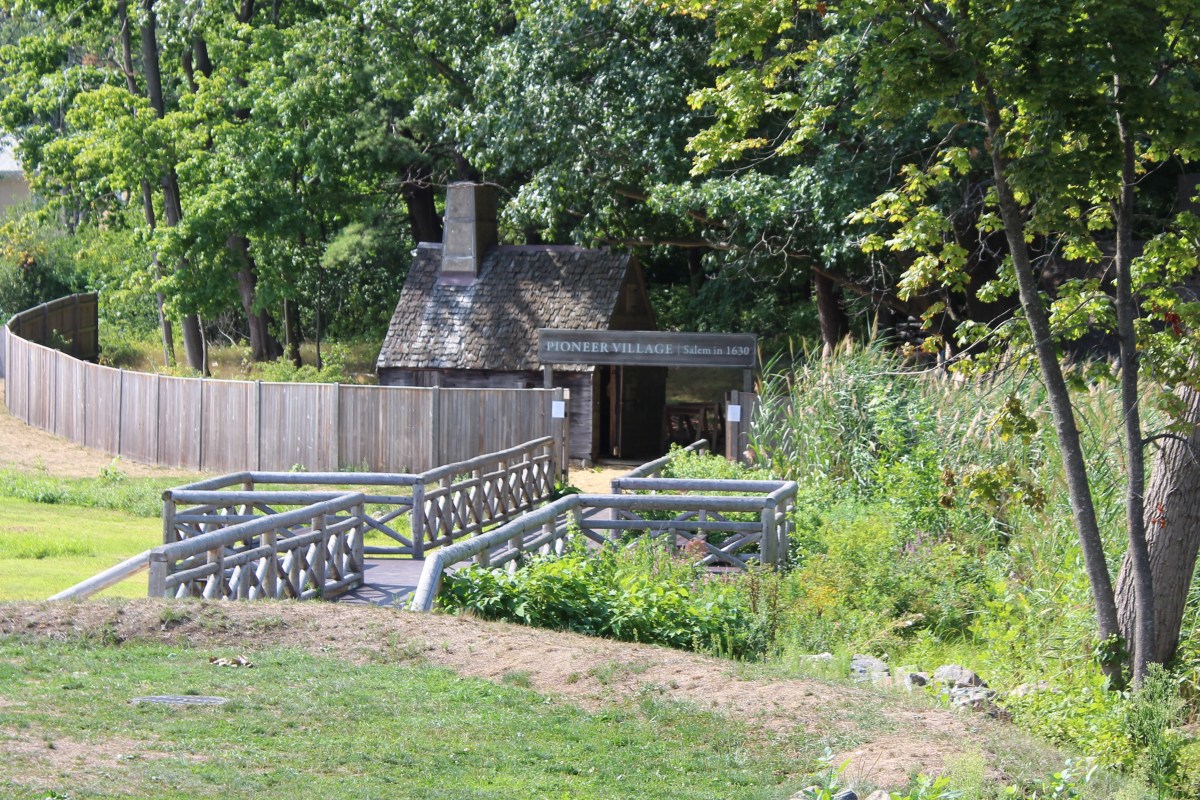
PLEASE NOTE: At this time, there is an Emergency Order in Salem where masks must be worn Downtown or in City Parks. Pioneer Village is located in Forest River Park, one of the mask required zones.
Constructed in 1930 to mark the tercentennial (300 year anniversary) of the arrival of the Winthrop Fleet in June of 1630 (Salem was founded in 1626), Pioneer Village is America’s first living history museum, predating the nearby House of the Seven Gables, and inspiring the much larger Old Sturbridge Village and Plimouth Plantation museums.
“The village sits on three acres of land and contains various examples of colonial architecture: dugouts, wigwams, thatched roof cottages, and the Governor’s Faire House. Culinary and medicinal gardens and a blacksmith shop further interpret early 17th-century colonial life. “
from the Pioneer Village website
The construction, while not using historic tools, did rely on local materials and historic design elements. It is also not a recreation of an actual village, but an approximation of how one from that time may have been laid-out. There is definitely the feeling of a movie set about the place, and there is very good reason for that: It was built specifically for a live performance to coincide with the celebrations being held across the city for the anniversary. A man-made pond was added for verisimilitude and so the actor’s voices would carry across to the park beyond.
Speaking of movie sets – Pioneer Village has famously been featured in Hocus Pocus (1993) and Mass Hysteria (2019), as well as numerous television productions, most recently in season 2 of Hulu’s Castle Rock (2019). A full list of productions filmed in Salem (not just Pioneer Village) can be found here.
Back to the performance: Audience members sat in the park and watched the re-creation of what Salem may have looked like in June 1630 when the Winthrop Fleet arrived. A replica of the Arbella (long since disintegrated and sunk) sat nearby in the harbor (or maybe actually sailed as part of the pageant?). When the scheduled performances were finished, the public was so enamored with the village that the City of Salem decided to save the site from redevelopment and has committed to preserve it in perpetuity.
Not much else is known about the pageant content, as far as I could find. One could guess that it included Winthrop repeating passages from A Model of Christian Charity (a sermon he gave before departing England), interactions with the Naumkeag, and the daily life, professions, and struggles of the villagers. The village’s creator, historian George Francis Dow, must have written the script, having written extensively on daily life in the Massachusetts Bay Colony.
Pioneer Village has had many iterations and stewards over the years, including historic reenactment troupes, a local college’s drama department, local Preservation Societies, and the city government. Today, it is run by The Witch House (we could spend a whole post just on that building and its name), where, in non-pandemic times, you could purchase a dual attraction ticket that includes admission and guided tours for both. While the two attractions are 1.6 miles apart from each other, they are easily accessible via the Salem Trolley.
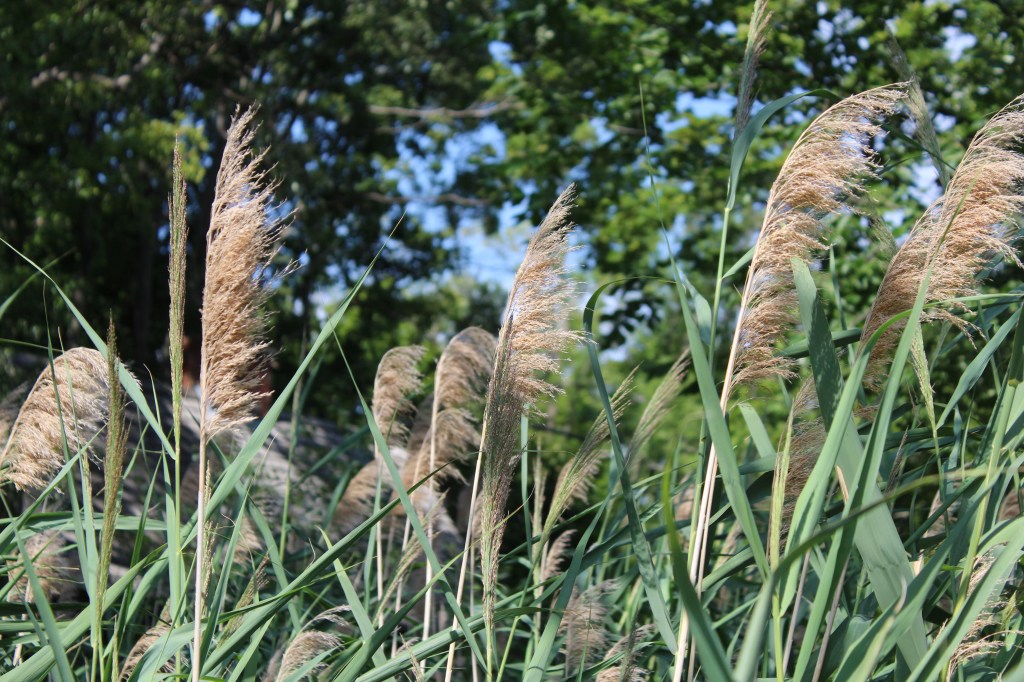
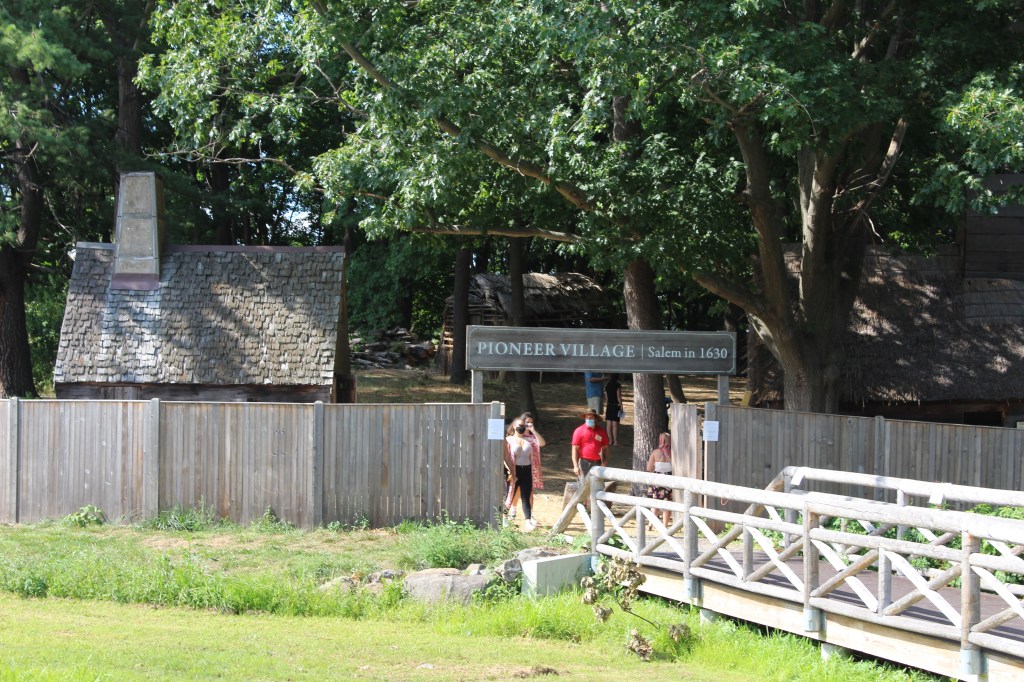

Today, the pond is now almost entirely hidden by reeds – the quacking of ducks the only indication there is water there – and the reeds hide most of the village from view. From the parking lot (currently free of charge), there is a newly-constructed (2019) walkway and bridge brings you through the reeds up to to a gate that reads “PIONEER VILLAGE: Salem in 1630” (see top photo). During this pandemic, the attraction is open limited hours for self-guided tours only. Entrance admission is a suggested donation of $5. I was happy to see that the cauldron was full of cash.
Using the free printed Self Guided Tour (one double-sided sheet of paper), you could wander around at your leisure, but since there were other groups in the village on this day, we had to follow a specific path, so our first stop is the Gift Shop (typically the last stop on any tour):


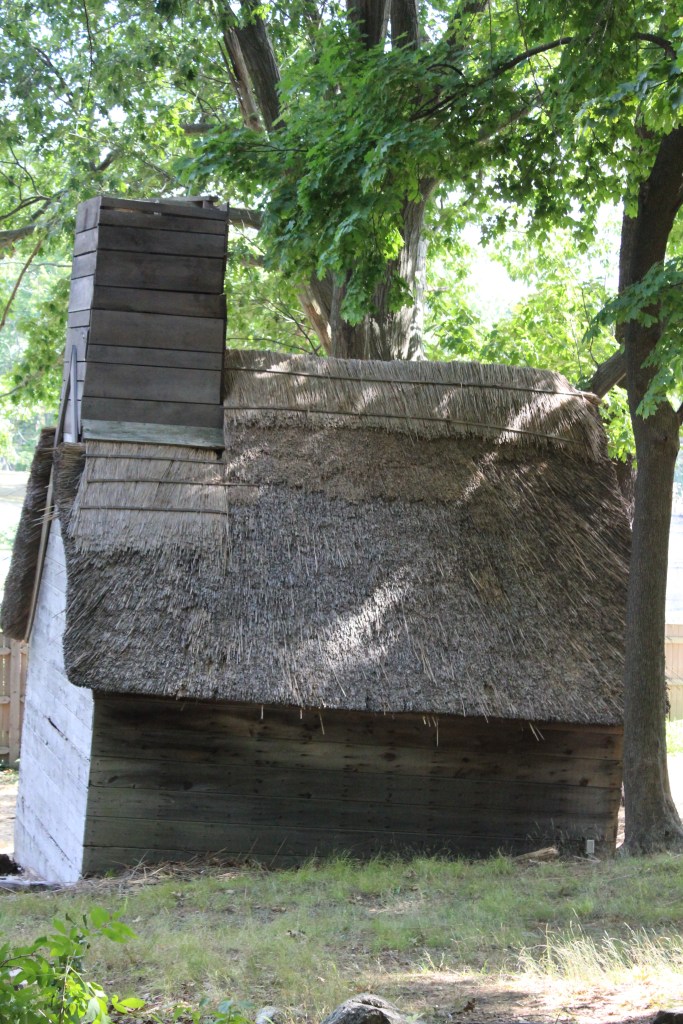
The Gift Shop is a small one-room building with a reed-thatched roof, holding envelopes of herbs, books, calendars, guides, and other items for sale.
Heading up the small rise behind the gift shop, we come to The Wigwam:

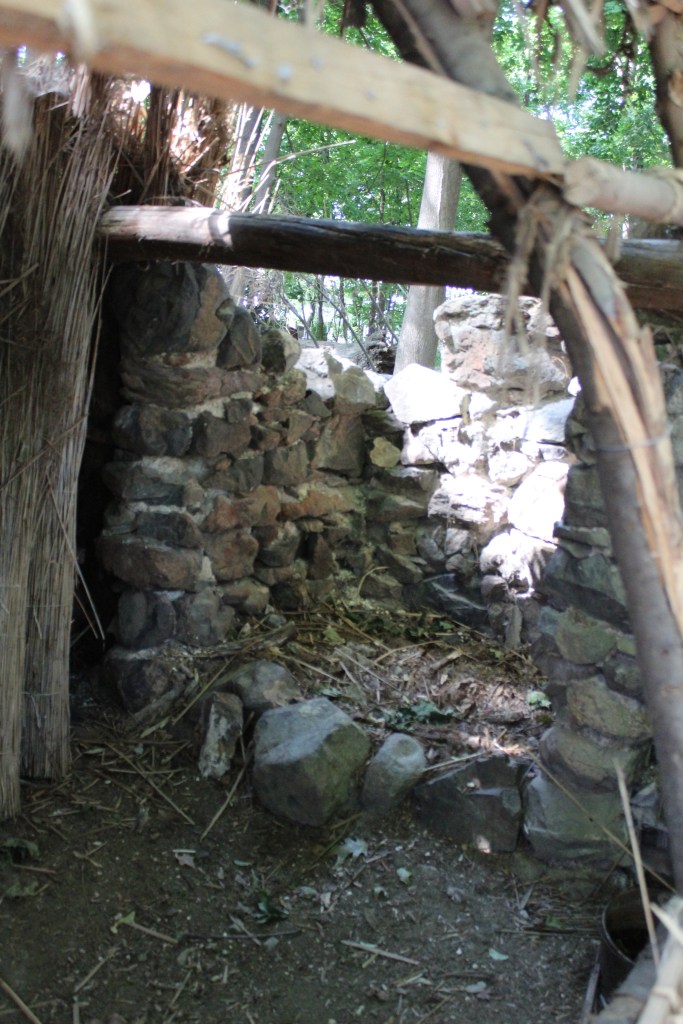
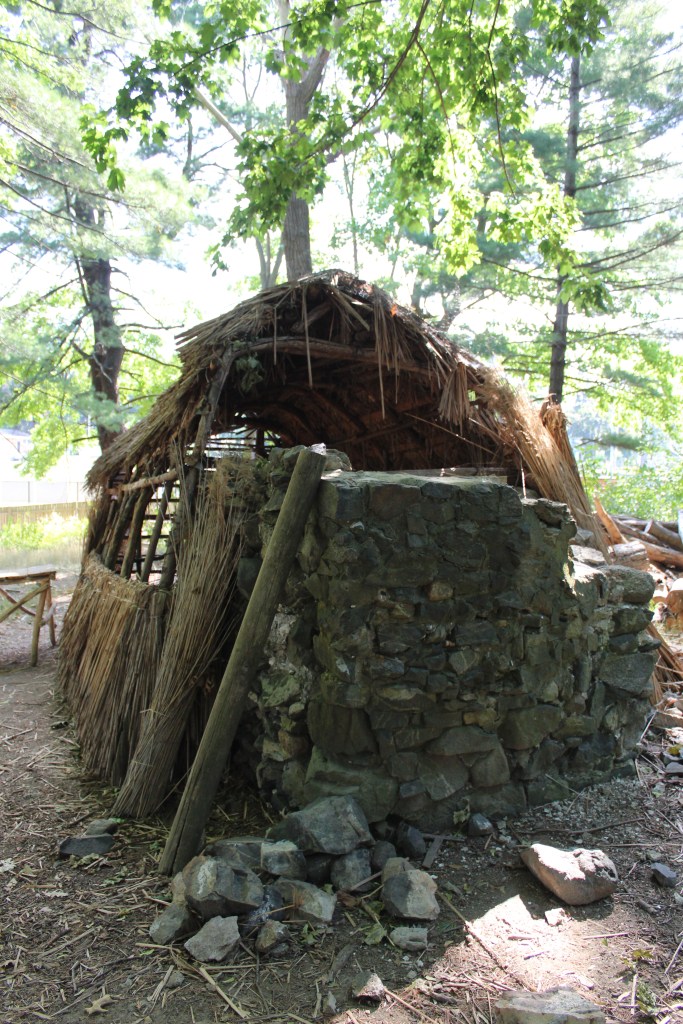
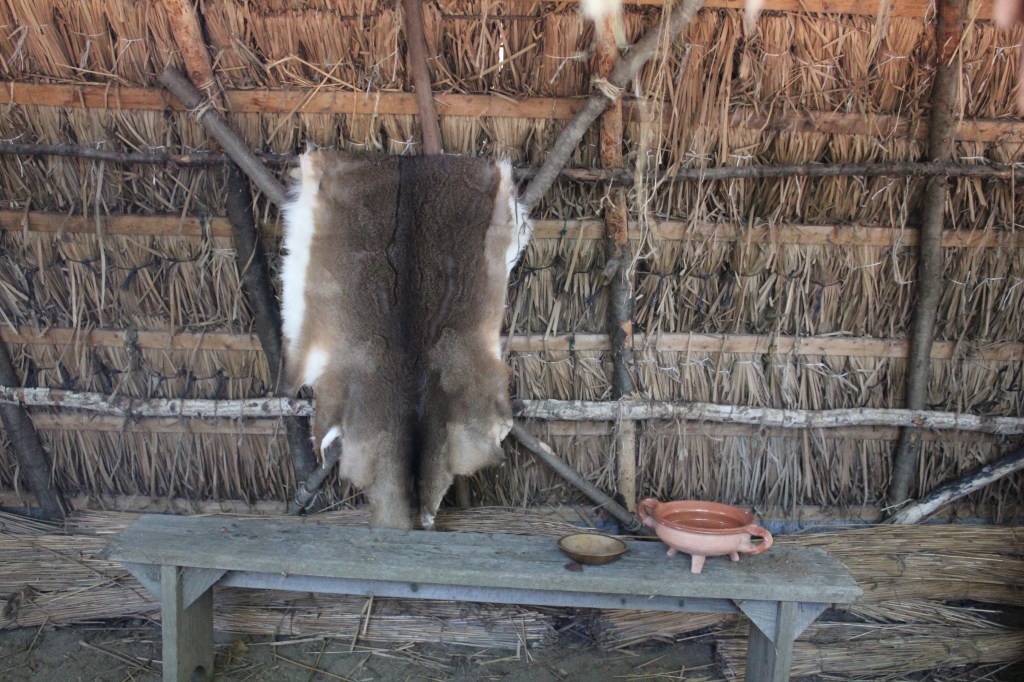
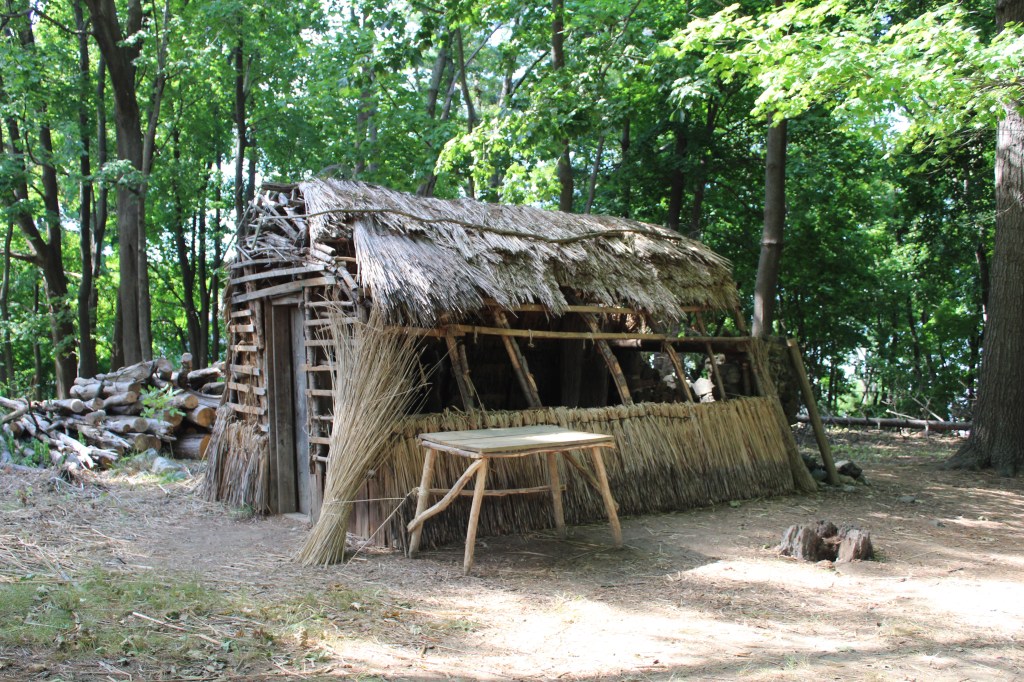
English additions to the Naumkeag wetus include wooden doors, English-style furniture and stone hearths. The wetus would have had the fire in the center. This example is “incomplete” so you can see the inside by looking through the walls.
The early English settlers certainly interacted with, and learned a lot from, the Naumkeag, the indigenous people of the area associated with the Pawtucket, Wompanoag, and Massachusett. This is evidenced by their survival in the harsh wilderness and their use of native plants and crops that were unfamiliar to them. The Naumkeag were a semi-nomadic tribe, creating seasonal structures called wetus (wigwam is the word for “house” in the Abenaki tribe, another Algonquin-speaking tribe from northern New England/Canada) that could easily be built in new locations with the abundant materials at hand. The English settlers took these seemingly “abandoned” structures and added doors, wooden furniture, and stone hearths. These structures served as their dwellings until their wooden structures could be built.
Here, up in the woods, there are also some remnants of former dwellings. There is a fire pit just off the path, as well as a clearing that used to hold the dugout houses for the animals and some of the settlers.
As we descend the path from the wigwam back down to the main path, we next come to The Governors Faire House and Garden:
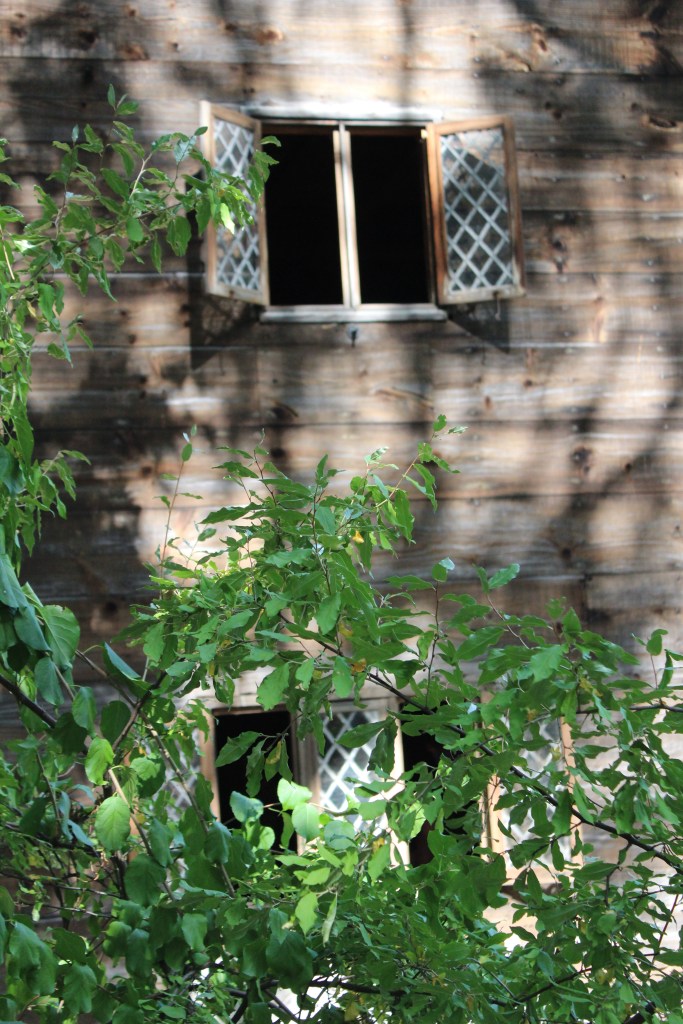

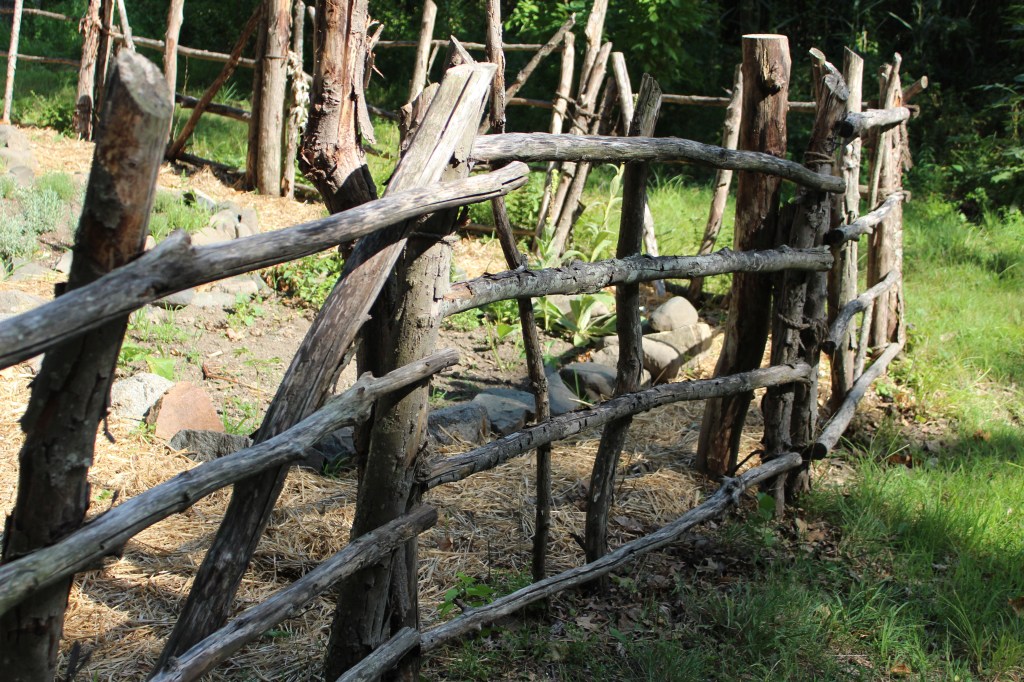
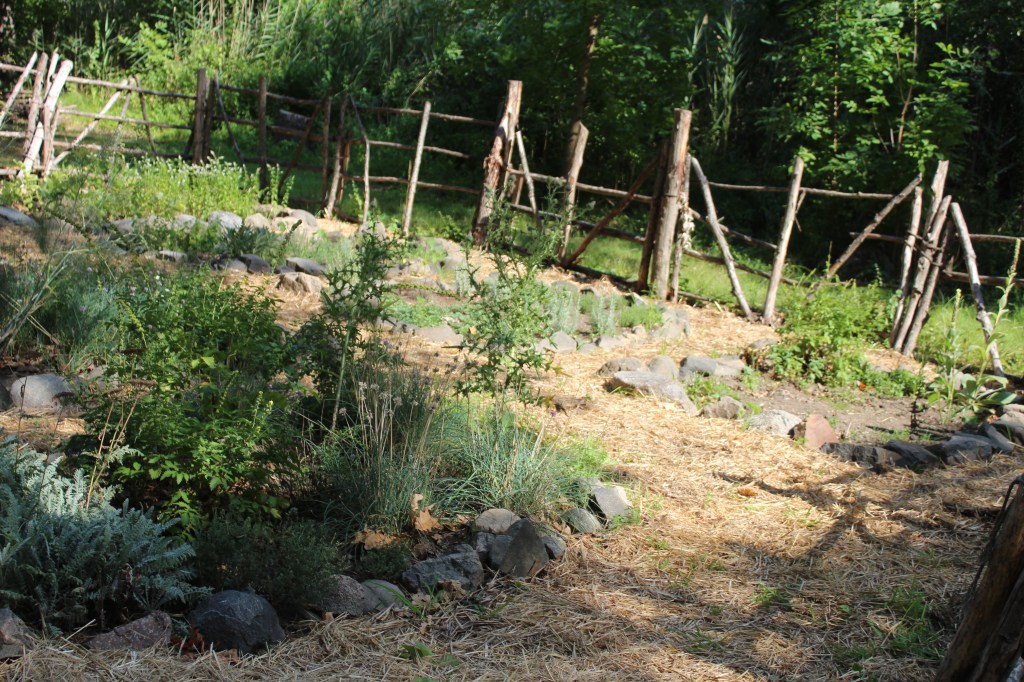
The garden represents one created for survival, containing many herbs used for medicinal and culinary purposes (this one is a parsley shy of being a Simon & Garfunkel song), as well as a few native crops (not shown). In addition to growing crops, they would have had sheep for wool, cows for milk and meat, a beast of burden for ploughing, as well as the fish of the ocean and game of the land.
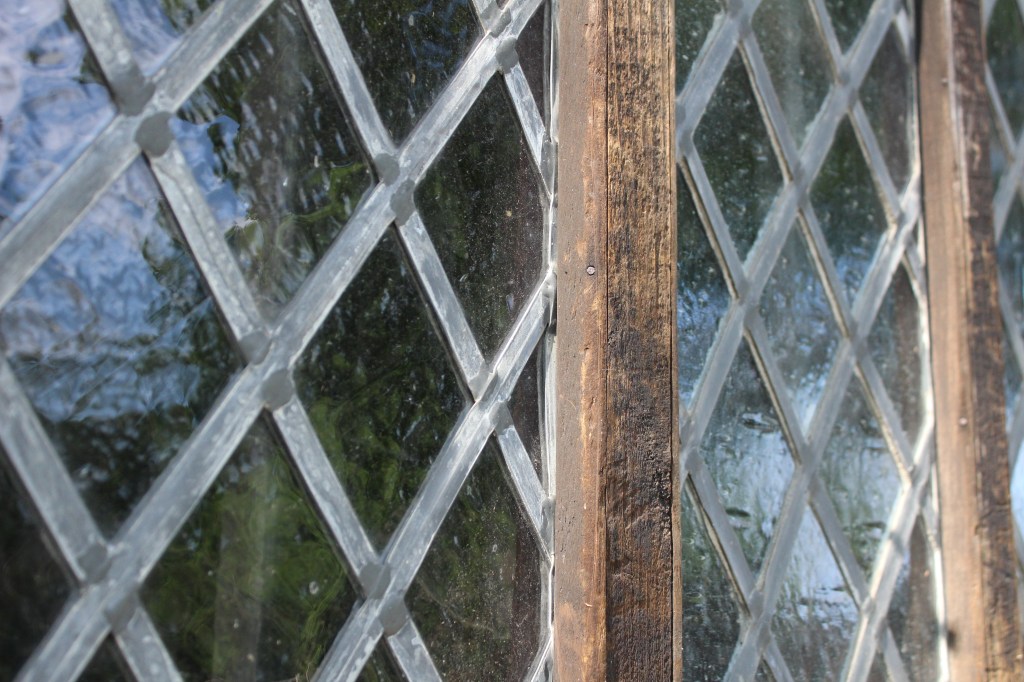
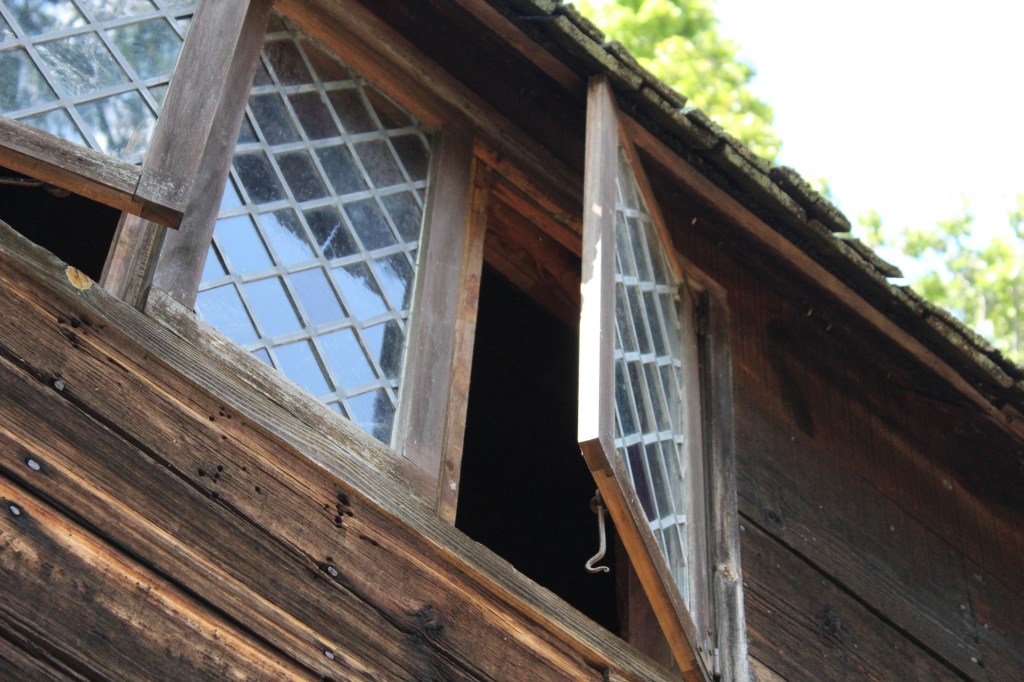
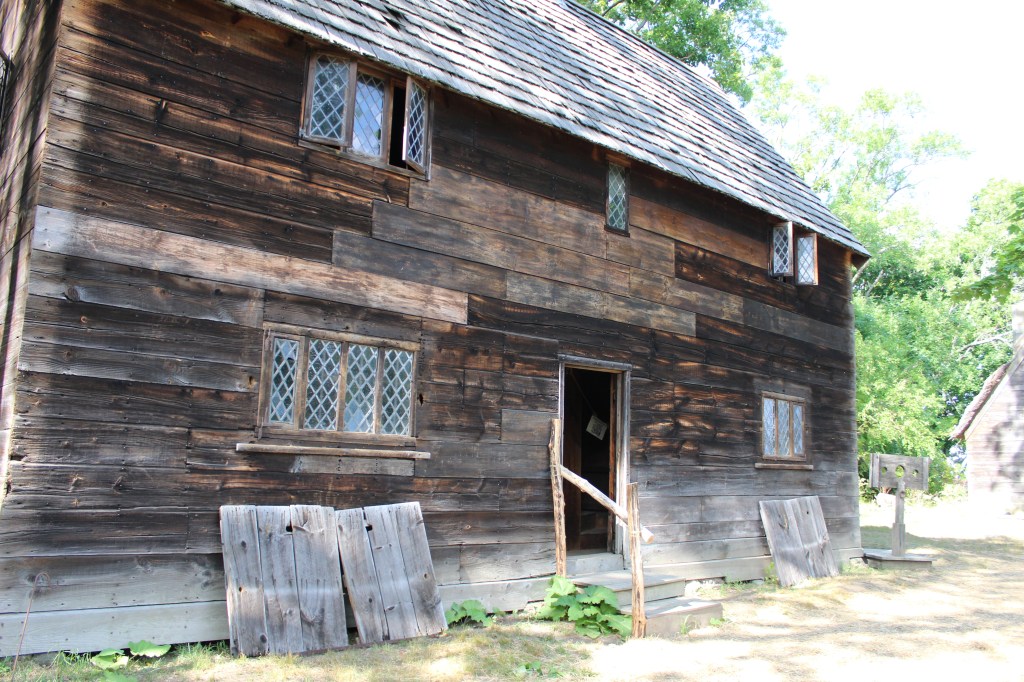
The house is historically unique. It is based on the original plans of the first two-story house to be built in New England. It was originally built in what is now Gloucester, MA sometime between 1620-1625. In 1628, John Endicott (sometimes Endecott), the Governor of the Massachusetts Bay Colony, ordered the house to be dismantled, moved, and rebuilt in Salem to become the Governor’s House. It was extensively remodeled and expanded over the years, but this replica was created through the research of the Pioneer Village creator George Francis Dow. Sadly, the actual Governor’s House was lost in the Great Salem Fire of 1914, but I found these photos of the interior c. late 1800s. The name “The Governors Faire House” comes from an account by Rev. Francis Higginson, who arrived in Salem with his Puritan settlers in 1629 found in the annals of Salem: “we found a faire house newly built for the Governor.” No doubt, Dow included this house in the center of the village because it was in this house that Winthrop and his party ate their first meal after arriving. They dined on venison, beer, and fresh strawberries, according to his diaries. Let’s take a look inside:

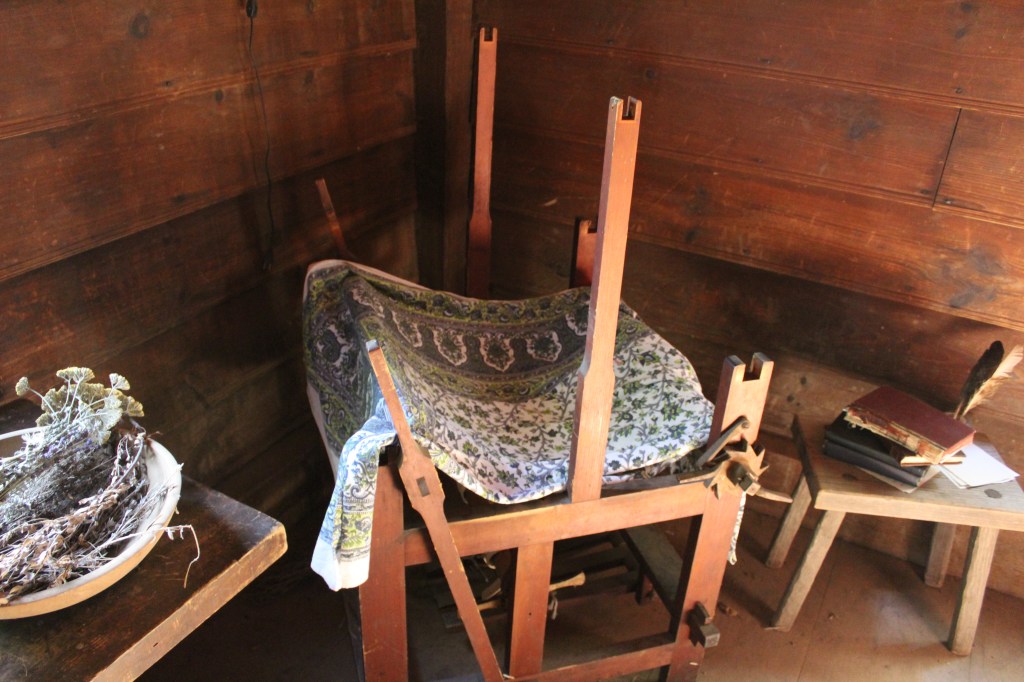
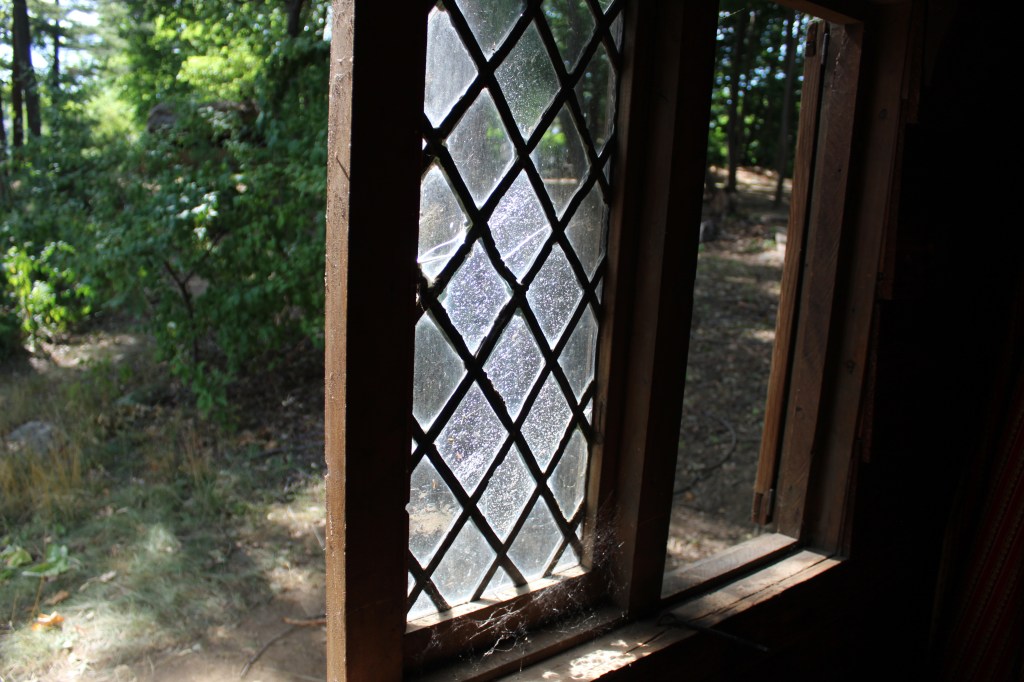
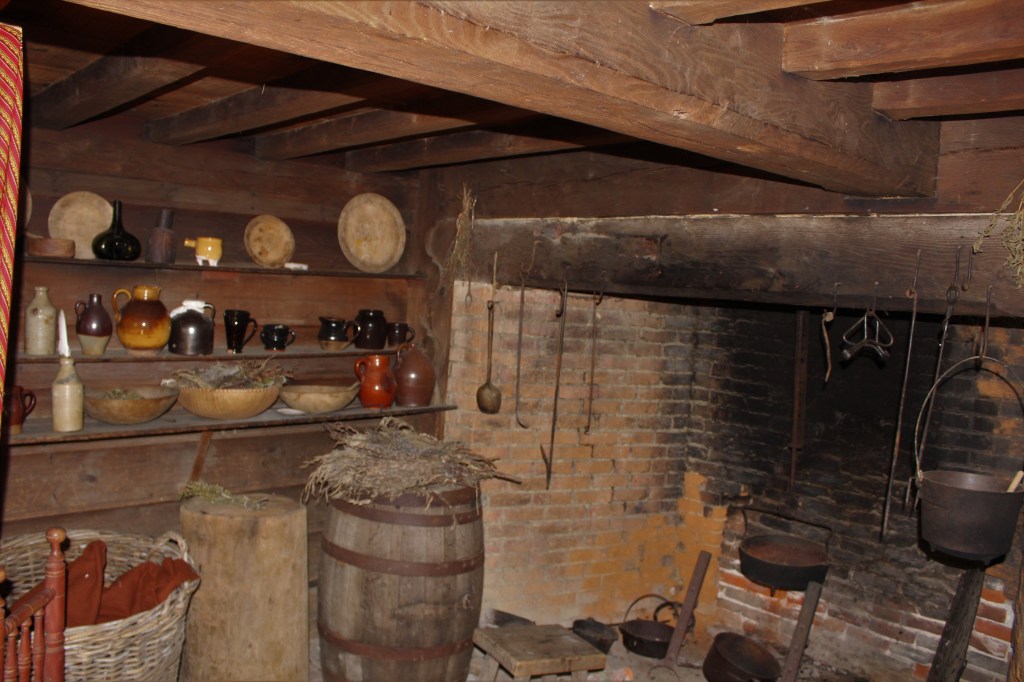
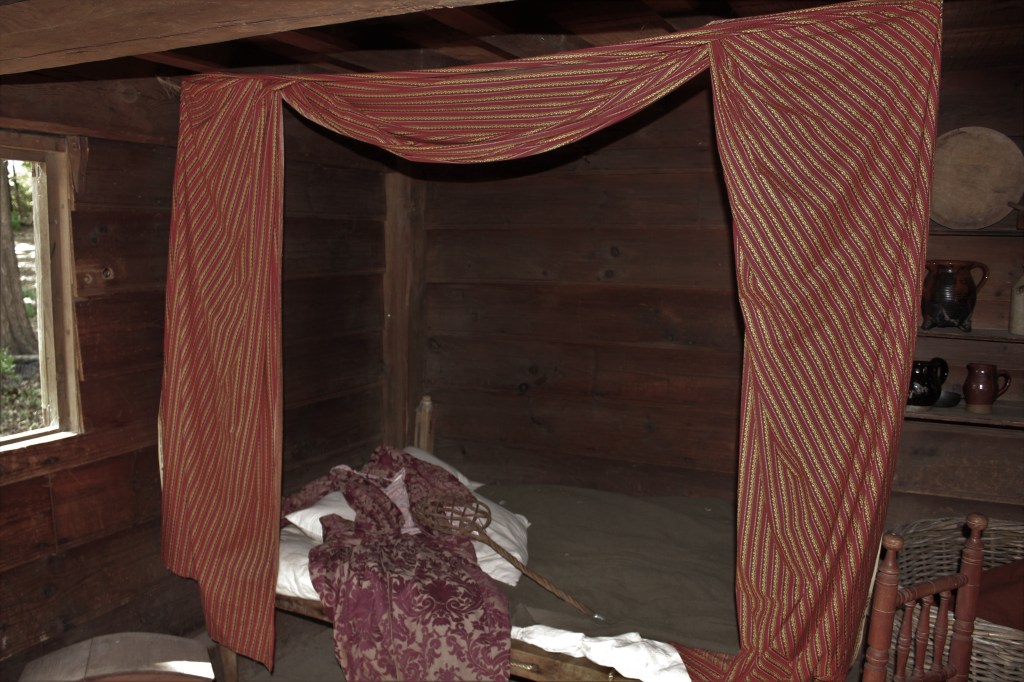
The house is divided into 2 rooms on the ground floor. In the current iteration of the museum, the second floor is used by the staff and is not accessible to visitors. On the left side room, they have highlighted the role of women in colonial America by showcasing the cooking hearth (central chimney), food stores, textiles, a Bible, the many herbs and spices used for medicines, and the bed because… well… birth, life and death all happen there.
The self-guided tour sheet, rather than explaining the items in the room, uses this opportunity to explain how very difficult life was for women at this time. Beyond their overall oppression and inability to own anything, their lives and health were constantly at risk as they were encouraged to “birth the new world.” In contrast, a native woman owned her own property, her own home, her own crops, and took part in tribal discussions (voting) – all the things denied to the colonial woman. Ironically, the colonial women still saw them as savage or living under lesser circumstances than themselves.
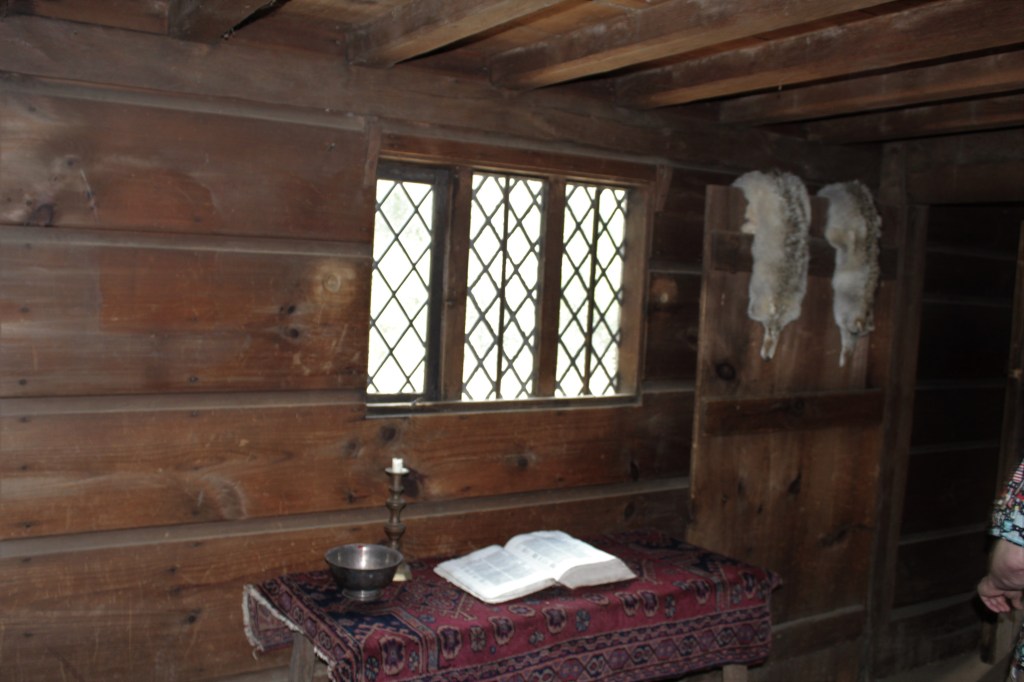
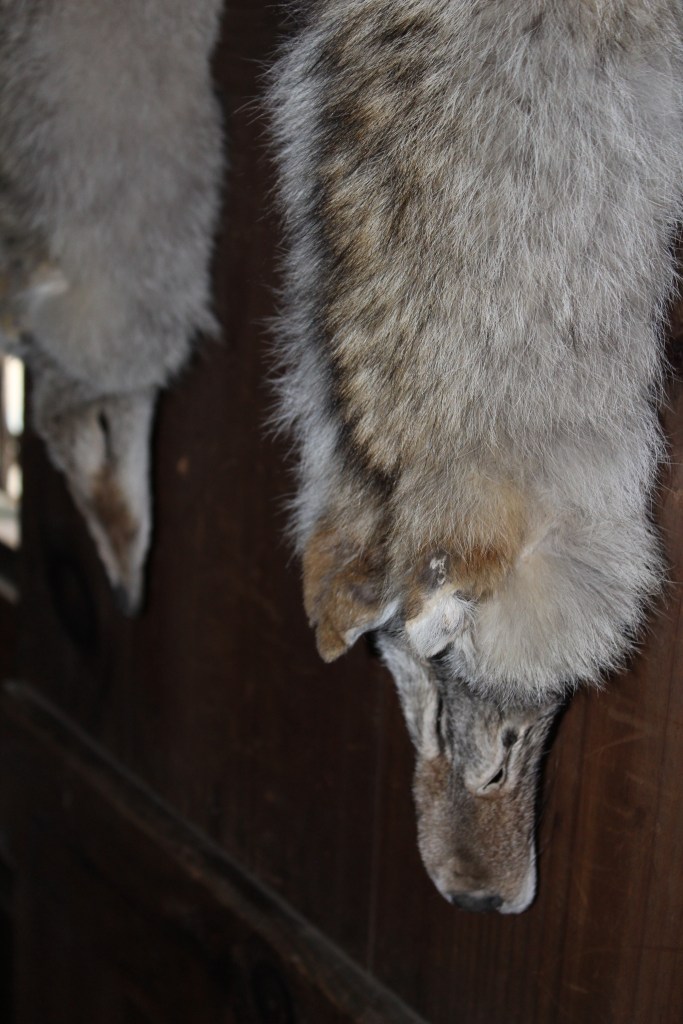
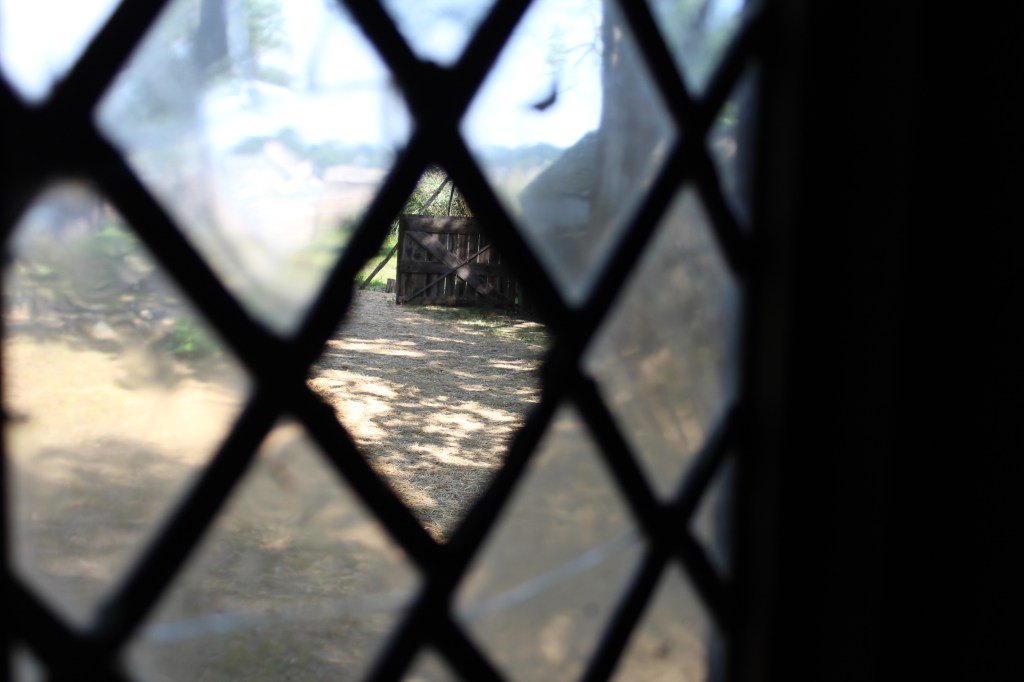
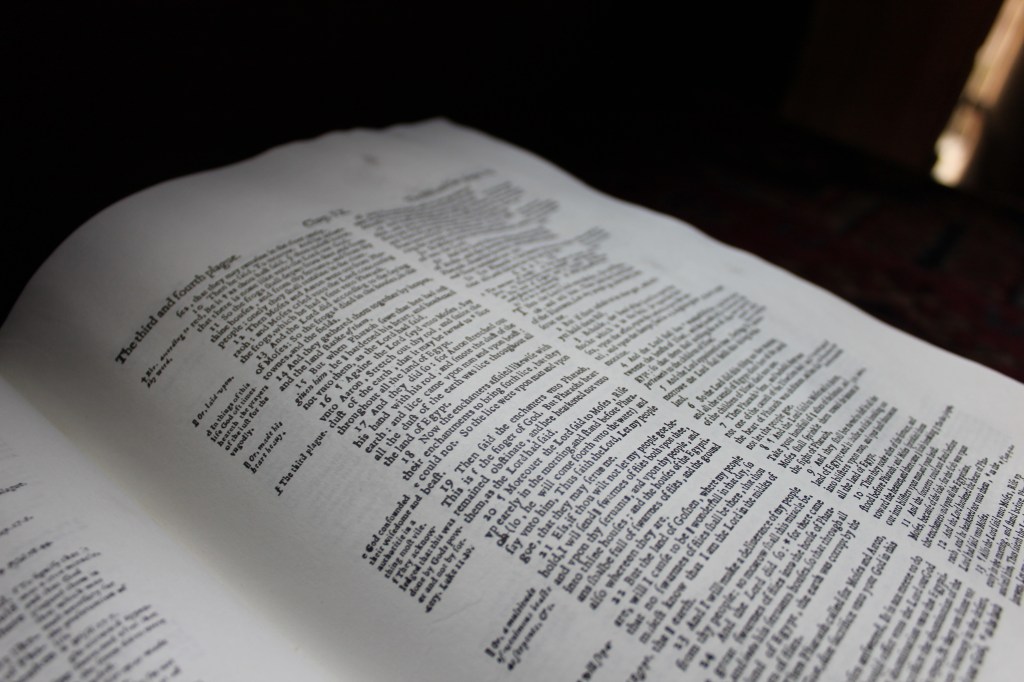
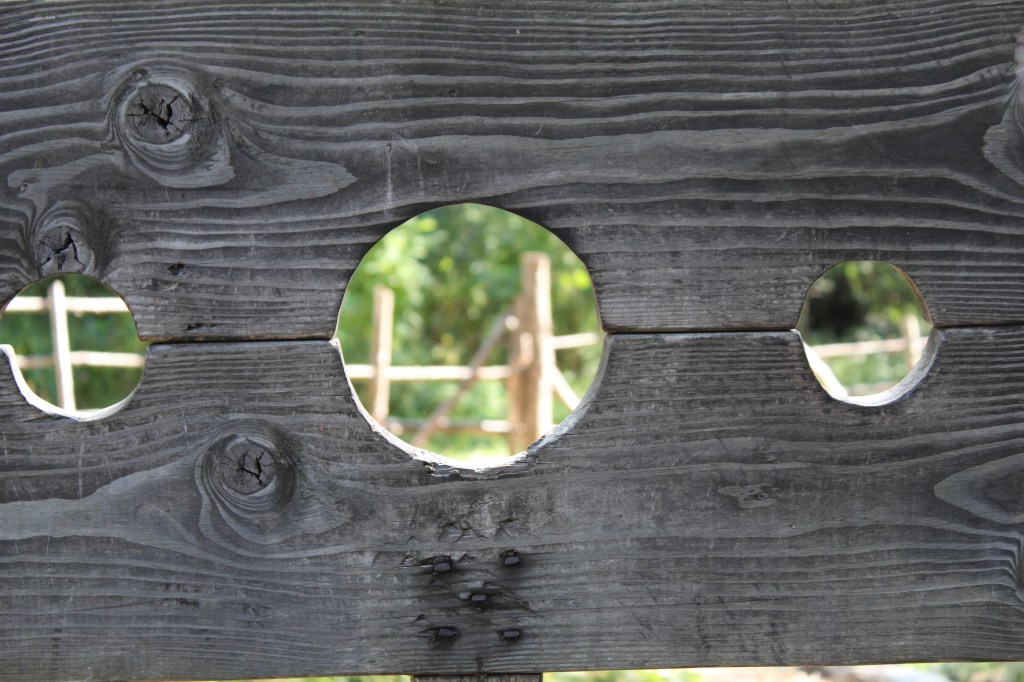
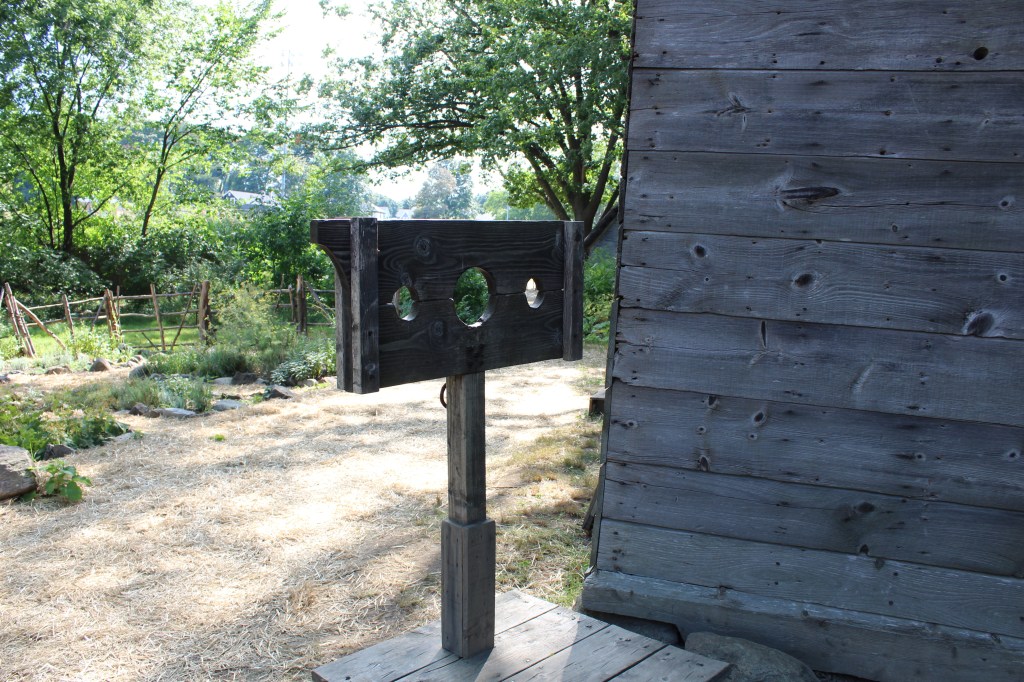
The right side room (also with a fireplace in the central chimney, not shown) highlights the Puritan authority and the world of men. In this room, we have classroom (every person was taught to read the Bible), some hunting spoils, and a place for prayer. Outside the house is a pillory for criminals and those who act against God.
The Puritan way was one of intolerance towards others, whether divided by gender, race, or creed. They even disapproved of other Christian sects. They thought the natives were, by default, worshiping the devil because they were not able to read or understand the Bible.
“Their intolerance and draconian punishments extended even to their own kind. Adulterers could be put to death, thieves could be branded and scolding women could be put in the stocks or pillory and publicly made a spectacle of.”
Pioneer Village Self-Guided Tour handout
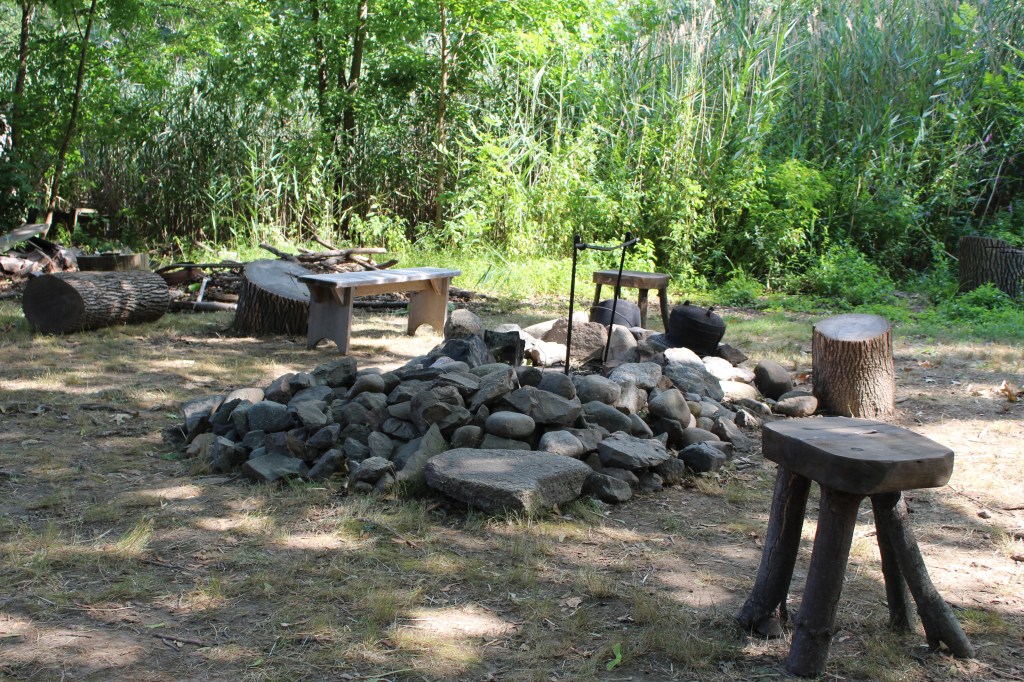
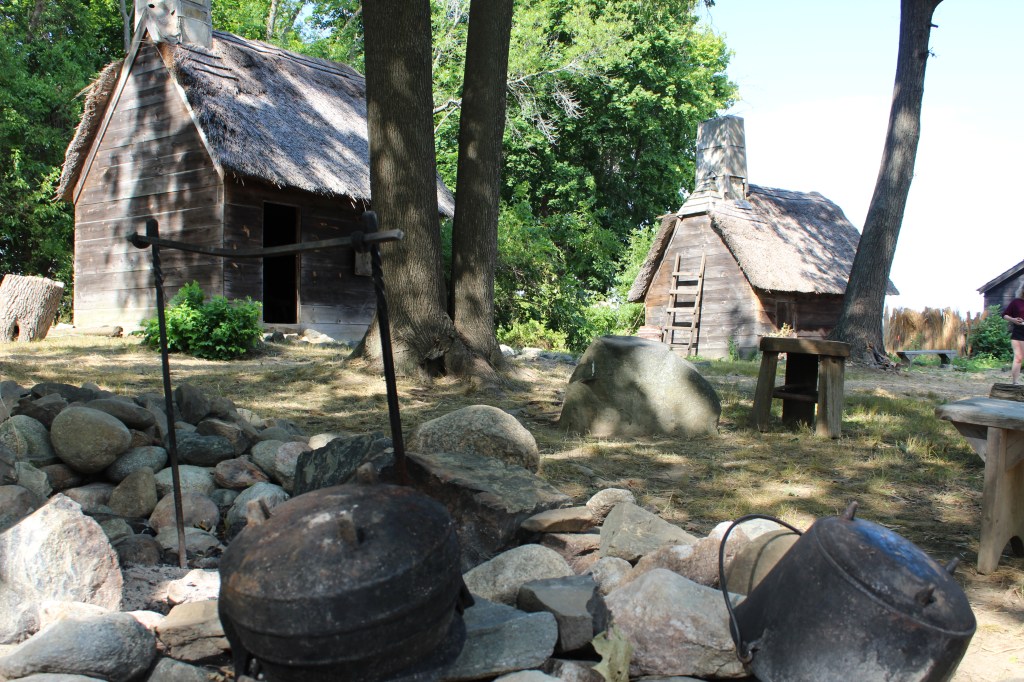
Next to the garden is a fire pit, likely for creating medicines from the garden or communal cooking. With the stools and benches, and the collection of cauldrons, it looks like a communal space:
Close by is a small one-room dwelling with it’s own meager garden that is set-up with examples of daily chores and children’s things:
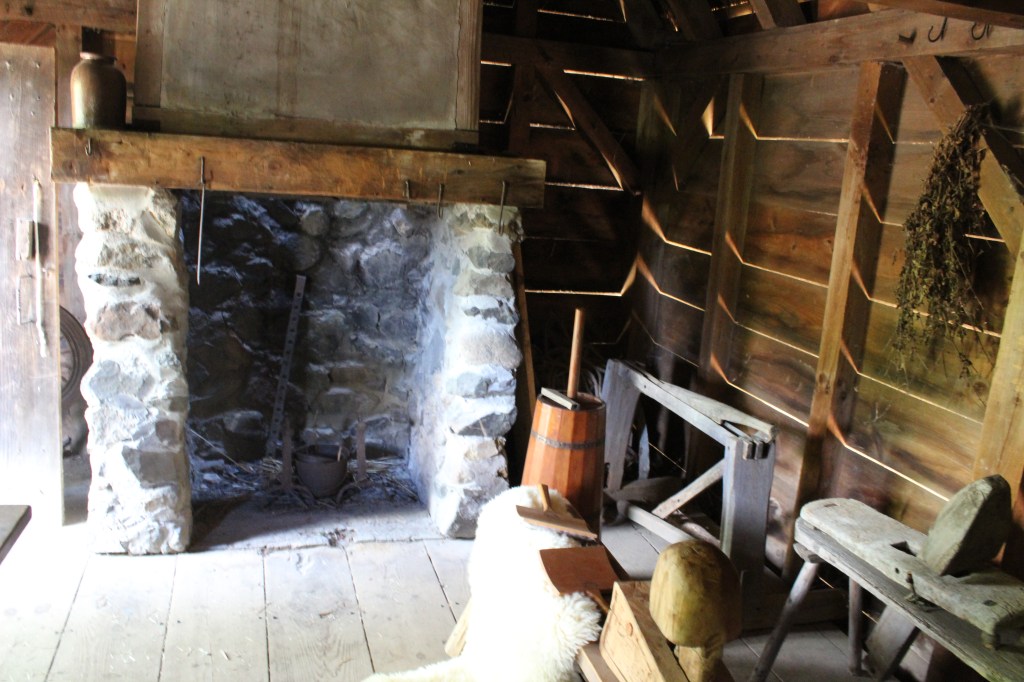
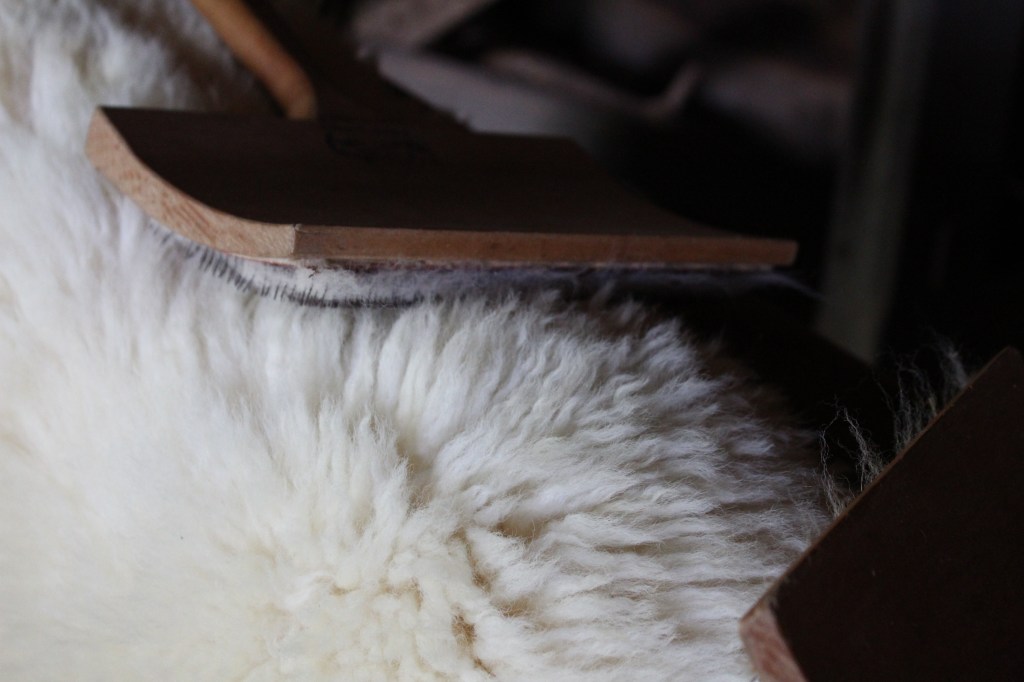

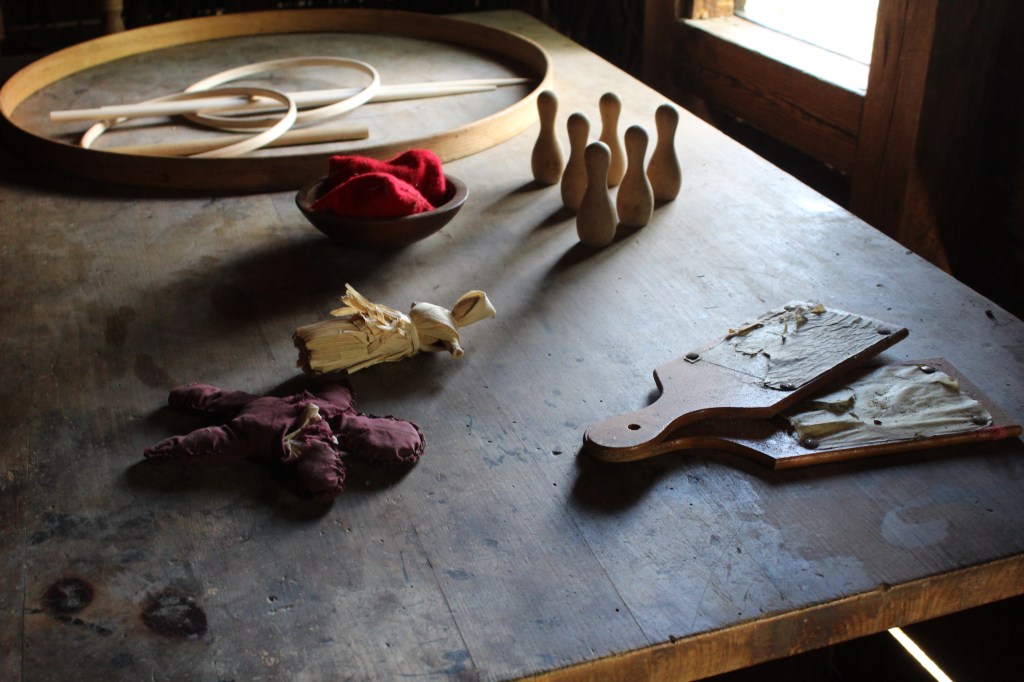
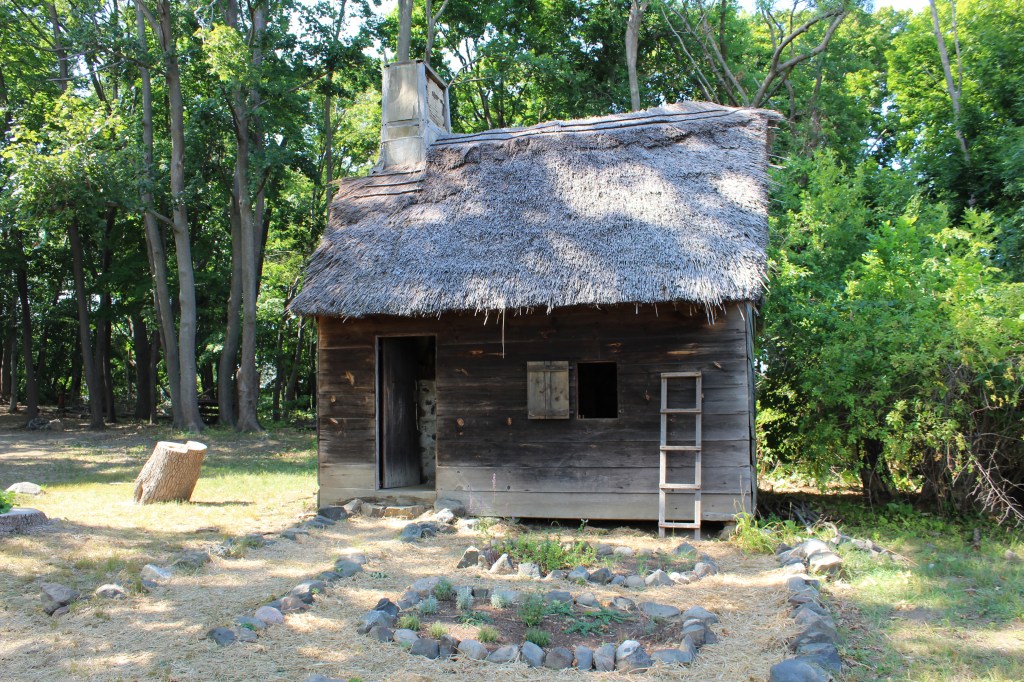
Here we find a butter churn, wool being carded, woodworking benches, a saw, a vice, what looks like a hat block, and various toys: dolls, paddles, beanbags, bowling, and hoops.
Across from this dwelling is the Blacksmith:

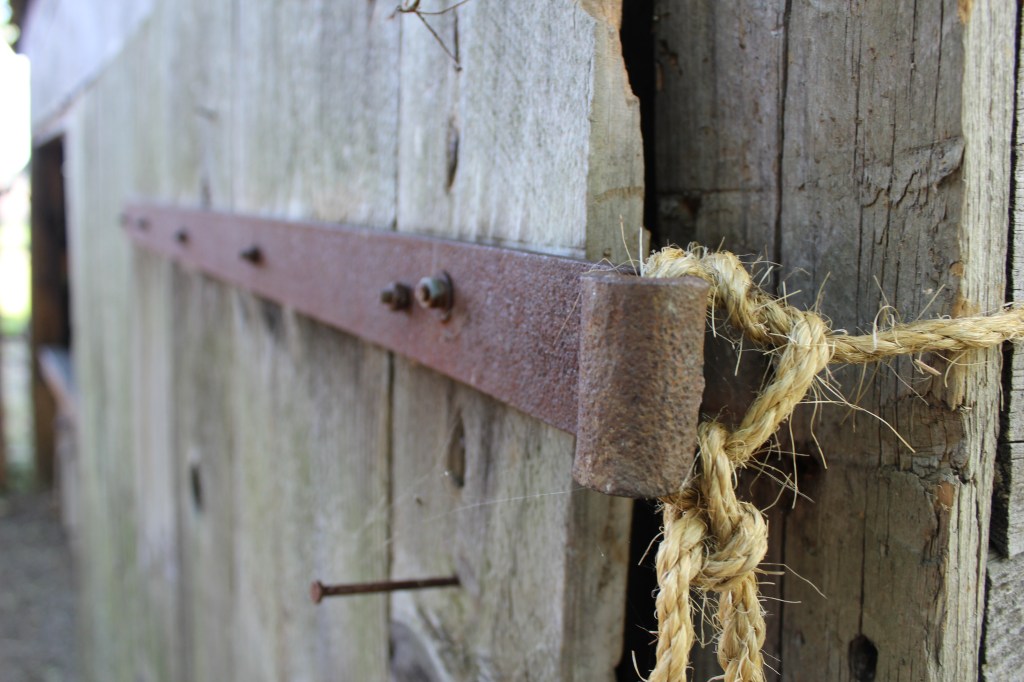
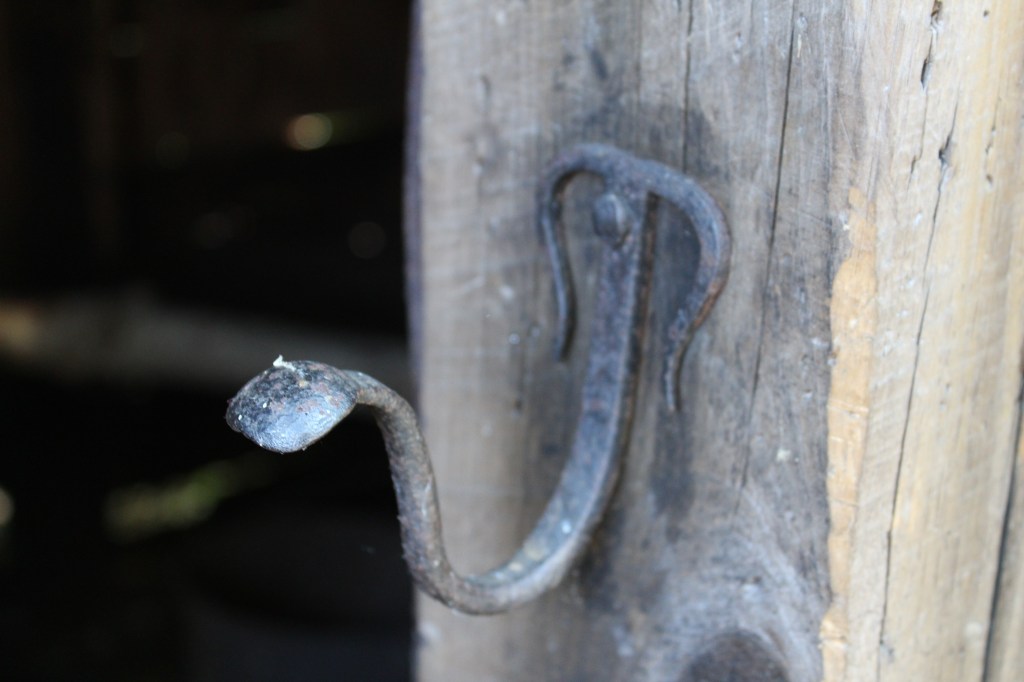
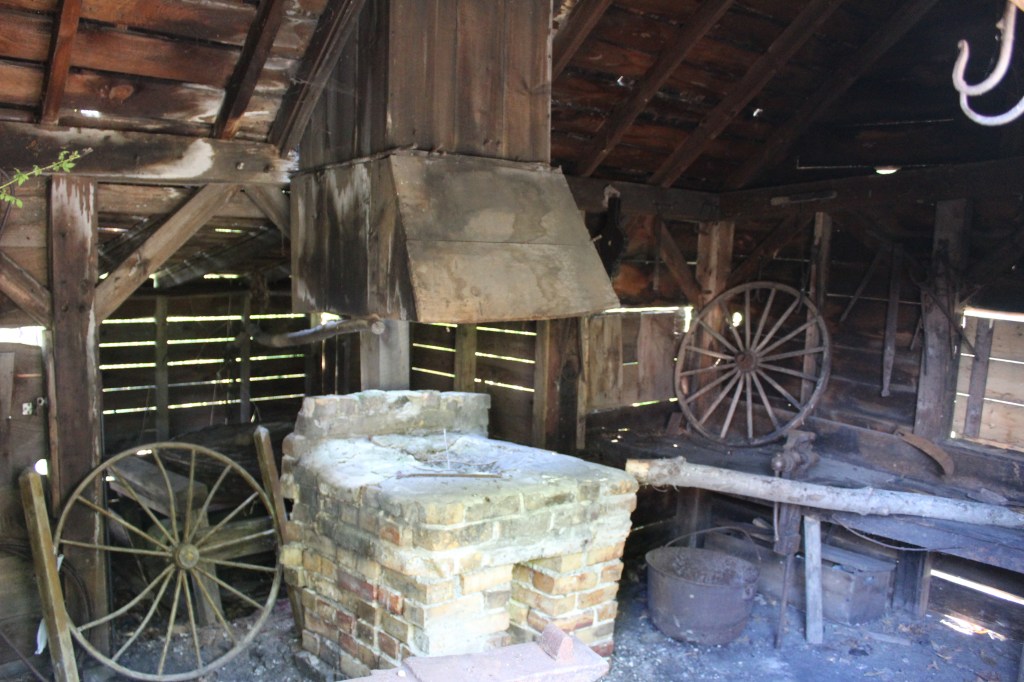
Tools were important to building a settlement: shovels, hoes, pitchforks, hammers, saws, axes, nails, hinges, cooking pots, etc. all served their purpose, and the Blacksmith could repair items that the settlers brought with them. This smithy is located with its back to where they original audience would have been, and I am not sure when it would have been added or moved. It is in a perfect spot, away from the other buildings and directly next to the pond, but it’s situation in the original tableau would block several buildings.
Next to the blacksmith is a fire pit with a cauldron hanging from a tall wooden tripod. Like the larger pit next to the garden, nothing is mentioned of this in the brief guide, though there is a line attached to a nearby tree, perhaps for drying dyed wool, or animal skins:
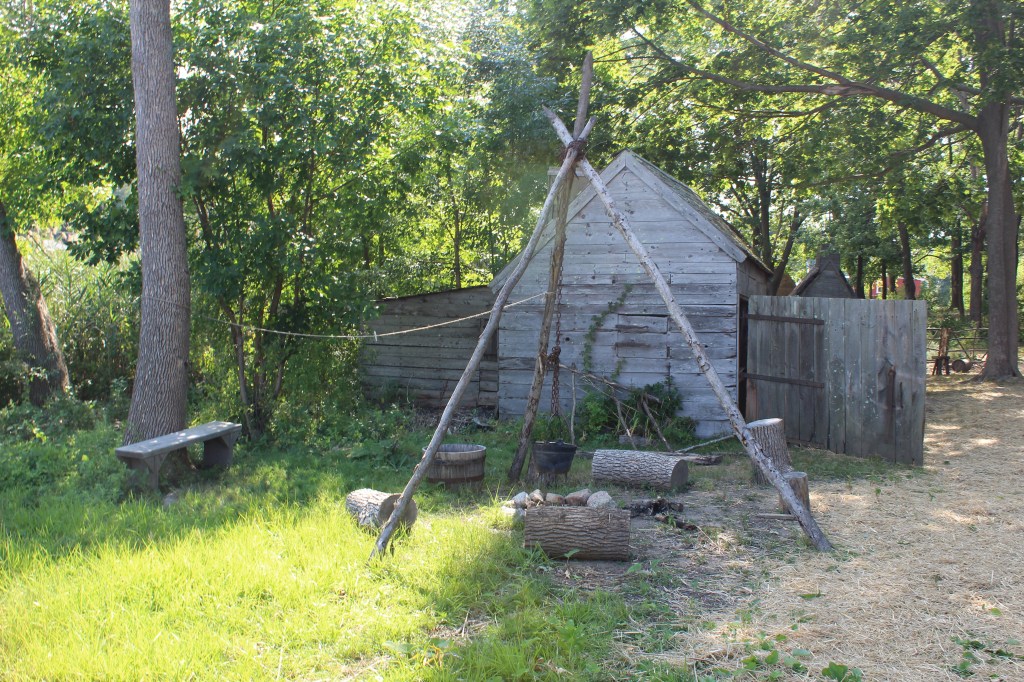
Similarly, there is no mention of what this small building could be:
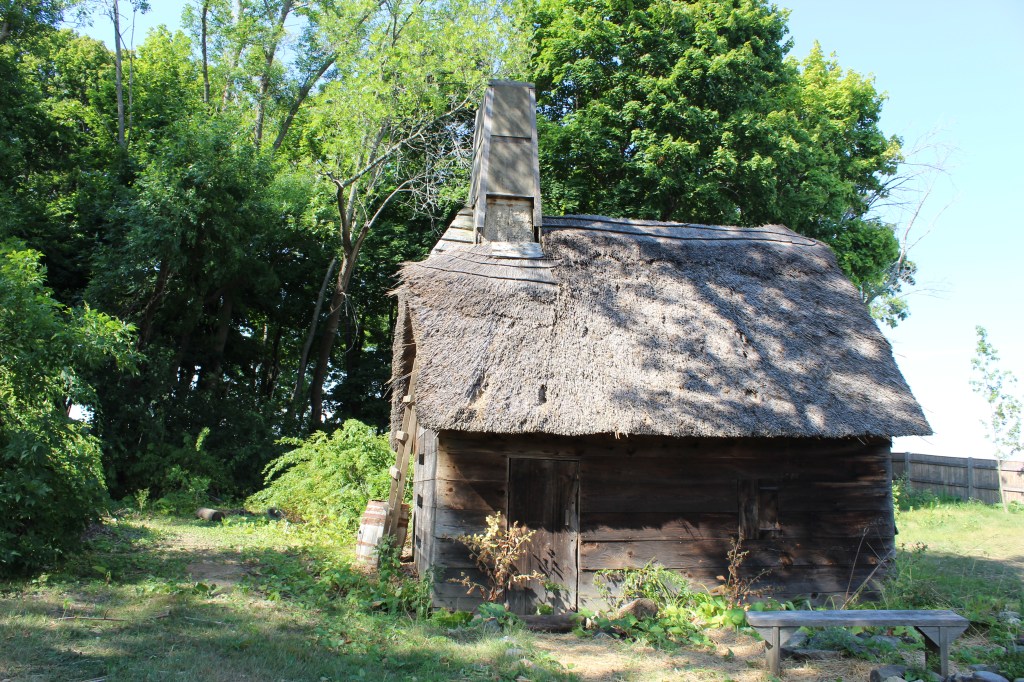
Though this vintage postcard says it was once known as “Lady Arbella’s House.” Note the placement of the tripod fire pit. Maybe it used to be hers.
There is also no explanation for this final building:
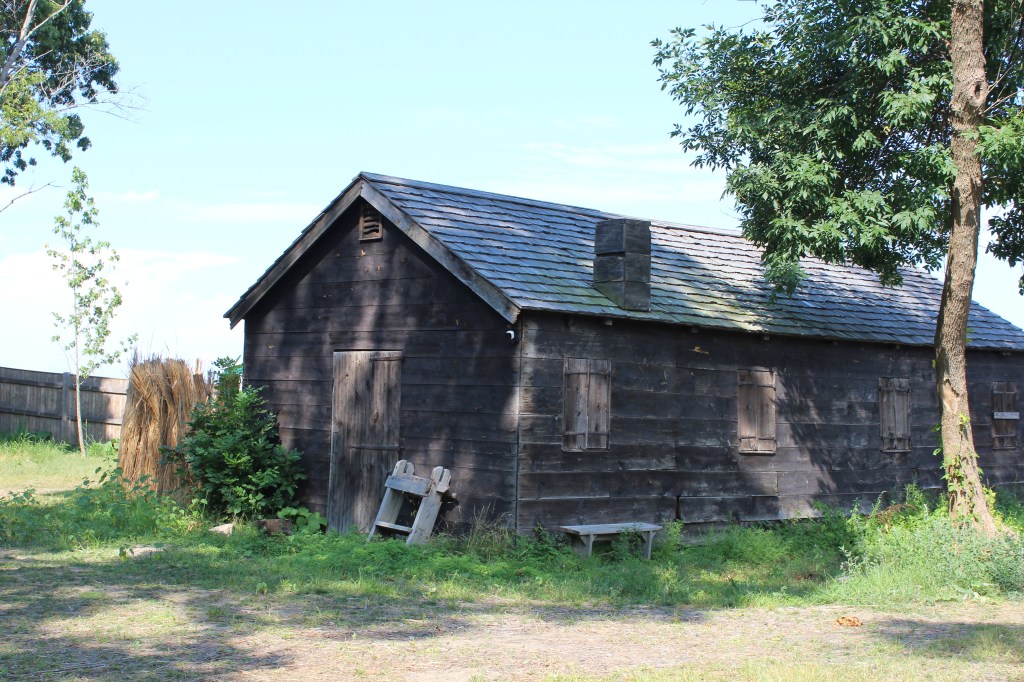
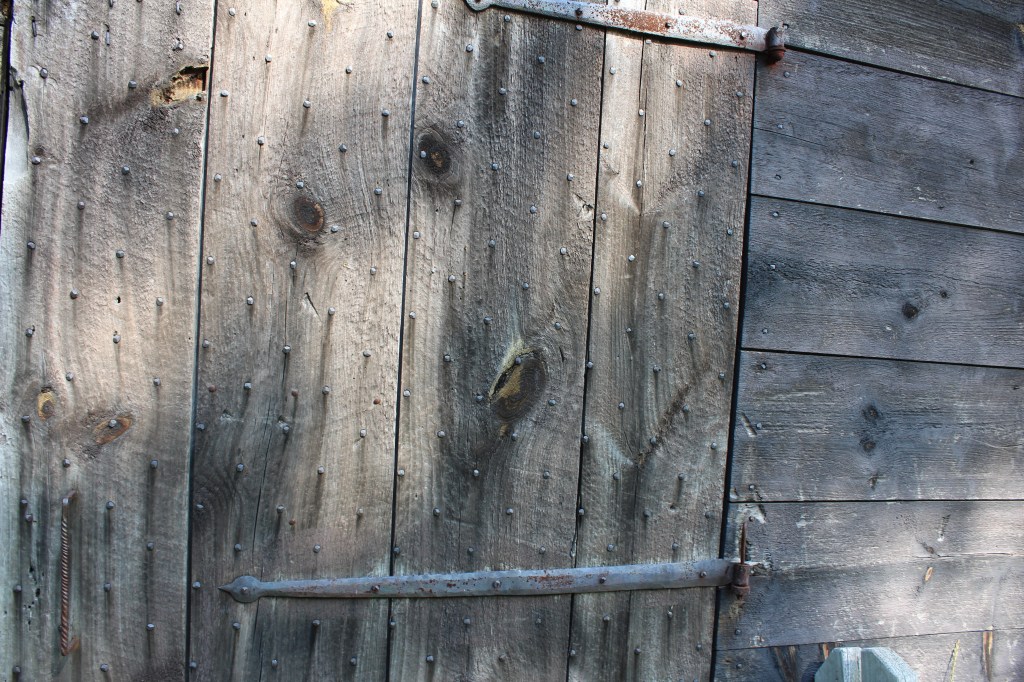

Is this a stable? A dairy house? Grain storage? With the shingled roof, multiple windows, and hobnail door, I also thought it could be the meeting house. I do know that at one time it was used for the staff to get into costume and to eat their lunches out of sight of the guests.
Having reached the end of the “road” in the village (the fence you see in the background leads out to the harbor and a boat launch – not very period), we head back towards the entrance, passing the houses and gardens and leaving via the small bridge that once was the entrance to the village (note that the pillory and stocks have moved around a lot over the years).
As we pass the gift shop and the administration cottage, and pass under the archway out of the gate, we leave 1630 and enter back into 2020, a time of disease, gender oppression, racism, religious intolerance, and inequality. Have we learned nothing in 390 years?
I hope that you will take the time to make a day trip to Pioneer Village. It is definitely one of the best Hocus Pocus filming locations for photos in Salem (the others are exterior residences or buildings) if you are making that pilgrimage.
 Small Stuff
Beautiful write-up. I am a travel blogger from India. Please have a look at my blog too.
LikeLike