Writing Prompt: Do you remember life before the internet?

Daily writing prompt
Do you remember life before the internet?

Yes. I’m Gen X.

Well that would have been a very short post…

In junior high school, I had typing class. There was a special classroom fitted with desks holding electric typewriters. Not word processors (my college essays were written on), but electric typewriters, with ink, paper, and satisfyingly clunky keyboards. On holidays, we made typography ‘artwork’ by following instructions (55 “X”, Return, 30 spaces, 57 “m”, etc) that, when finished, created a picture made of letters and symbols. I ended-up Valedictorian of my graduating class (#humblebrag), but typing and gym were my worse subjects by far. The typing teacher would put a piece of paper covering my hands so I couldn’t see what I was typing. I had to rely on the hand placement around ASDF JKL: and ‘feel’ my way to the other letters without peeking. I cheated more than I should have, and regretted it later in life. Today (34 years later), I’m more proficient and can type quite quickly without looking. I wonder what my speed is (remember Mavis Beacon Teaches Typing)? Maybe I could be a stenog!

“Speed Test” from the original Broadway cast of Thoroughly Modern Millie

When we moved up to the high school, there was a “computer lab” full of Apple IIe desktops with files and files of floppy disks (the actually floppy 8 inch ones – do you know how you keep them from being written over? you cut a notch in the side of them…). These machines were relatively new, but just at the end of their lifecycle. The screens were black and green, and the MS-DOS game of Math Rabbit required several floppy disks to be inserted to play. I remember a full screen of ‘code’ just for the machine to draw a square (<run>). By the time I was a senior, I was writing essays and term papers on a Brother Word Processor that looked a lot like the electronic typewriters of years before, but I could type and edit an entire page on a one-line green and black screen before it typed on the paper. It saved on ink and white-out, but today’s kids would have had a very hard time with it.

The World Wide Web went public in 1993, while I was graduating. My small town library didn’t have internet, and neither did the school. When I went to college, there was a more sophisticated computer lab, but you had to sign-up for time to use the computers attached to the World Wide Web, and you had to pay per minute of usage. By junior year (1995-1996), we had email, and all of the machines in the lab were connected to the internet. I remember printing out (on a dot-matrix printer) email from my college boyfriend. Personal computers were extremely expensive. I didn’t have my own until the 2000s.

If you followed-along on my post about my job experiences, the internet didn’t really change my life until I worked at the touring theatre production company. Out of college, I ran a dinner theatre. We didn’t have internet, we had tap dancing! I wasn’t even able to use the internet to find the touring production job. I saw it in the newspaper (in print!) and mailed (by post!) my application for the job. Then they called me on a landline (!!!) to set-up an interview. This all seems SO CRAZY when I’m writing it, but that’s how it was. I didn’t have my first cell phone until 1998!

Anyway, the next job was for a touring theatrical production company based in downtown Boston. There was a Cellular One store two doors down (later CingularOne, then AT&T), and on a lunch break I went an purchased my first Nokia phone (indestructible!) with the number I still have 25 years later. I still didn’t have internet. The phone made and received calls, and could keep my calendar. While we had computers at our desks, they ran DOS in a closed system that tracked reservations and ticket sales. After a year of being in the office, I discovered there was one computer in the corner of the office connected to the internet (dial-up). The owner had set it up because someone told her it was important, but no one used it. One day, she asked if I knew how to use this “web” thing. I went in every chance I got to look for discounted show tickets, travel deals, and venue research for her. A year later, they gave us email and connected all of our CPUs to the internet. They gave us a day to ‘get used to’ to internet and to play around. Our office manager, a longtime user of newspaper personal ads, found the online ads and loudly proclaimed; “They have ones for you!” As a gay single man in an office of young straight females, I was suddenly the center of attention as they all crowded around my computer to see what the gay ones looked like. I don’t know if you’ve experienced Yahoo personals in 1999, but they were…specific… and graphic. After 2 or 3 “Daddy looking for a pig bottom” and “CD for a…” they all ran away. I looked at a few more and one popped-out at me:

Life is a banquet and most poor suckers are starving to death

Auntie Mame

A quote from Auntie Mame? My favorite movie of ALL TIME?! Then it went on to say that they were looking for gay friends, wanting to explore the city, etc. I was living, at the time, in South Boston with three straight single women. Every night it was Will & Grace & Grace & Grace. If we went to a club or a party, they got free drinks from sleazy guys wanting to get with them, then I was the ‘boyfriend’ at the end of the night if they didn’t want to take them home. Sometimes they would all come home with someone, but I was always alone. Though the ad said “looking for 25 and older,” and I was technically months away from 25, I wrote to him, which started a months-long correspondence.

SPOILER ALERT: That man and I are celebrating the 24th anniversary of our first date later this year, and just celebrated 9 years of marriage.

There have been dark times brought about in my life because of the internet, but since I would not have the life I have now without it, I can forgive those moments. I use it almost constantly for work and for personal use, and you are using it right now to read this story. How insane is that?

So… do you remember life before the internet?

Translating Experience

Daily writing prompt
What jobs have you had?

The writing prompt is “What jobs have you had?”

You say “Jack-of-all-trades (master of none).” I prefer “Renaissance man.” One is a cut, the other a compliment (of a sort).

I started my work experience at the age of 15. After many years of obsessing over every movie musical that came on television, or I could get at the video store (we are talking 1989 here), I decided it was time to take tap dancing lessons. The local dance studio was only a mile from home, near my Aunt’s house. At the time, a family friend, her daughter, and my cousin all had 2-year old toddlers (yes, one was the uncle to the other, it was a surprise to everyone!). The grandmother/mother of two of them lived 2 doors from my Aunt. I became babysitter to one of them on several afternoons and all three once a week. I used that money to enroll in classes down the street. From this, I learned patience, entertaining a tough audience, perseverance, conflict management, and how to care for another human being.

At 16, I started work at a family-owned small convenience store and deli. Looking back, I cherish the time spent there. It was truly being in a second family, I got to know the regulars, I learned valuable skills in retail, point-of-sale, merchandising, cooking, customer service, time management, and working as a team. For some reason, this small store became a central hub for Swedish and Scandinavian specialties, especially at Christmas. The owners were not Scandinavian, but they embraced this niche. We sold lutefisk (frozen, I called them porcelain fish for the sound they made when they hit the counter), made spice bags for Glogg, sold Cardamom braids (yum!!!) and Lingonberries, and made Swedish meatballs decades before IKEA made it to Massachusetts. We were so busy that former employees would come in to help during the season, making it even more of a family reunion party atmosphere. The store has been gone for many years, but a few of us still wax nostalgic at the joy we feel when smelling cardamom when it gets close to the holidays, or we think of stealing cookie dough from the freezer.

The summer before I left for college, I joined the Avon Parks & Recreation Department as a counselor at the day camp run on the high school grounds. It was free for residents and included open play, crafts, and sports for most of the day on Mondays, Wednesdays and Fridays, with paid field trips on Tuesdays and Thursdays for certain age groups. Building on my babysitting skills, I honed patience, entertaining a tough audience, perseverance, conflict management, crafting, pedagogy, security in crowds, and emotional support/encouragement. The kids were 6-16 years old, and in this day and age, I can’t imagine them being left in the care of semi-untrained teenagers and young adults.

In college, I held two very different positions. For the first 2 years, I was a “Script Librarian.” We had a closet full of theatre scripts with a very small desk in it. Students could come and borrow and script, or set of scripts, for use in their classes or performances. I sat there and catalogued, itemized, and tracked them all. The copious amounts of downtime gave me ample opportunity to read through most of them, which came in handy when I was advising younger students on where to find an audition monologue or scene to stage. For my last 2 years, I was a “Safety Escort.” <hold for snickering> My college had a “boozer cruiser” – a 10-passenger van that drove students around the campus at night for free. You would call the dispatch (a lonely room in the campus police building) and the van would drive you wherever you needed to go on campus. Driving around was fun, because you got to be out and interacting with other students (even if they were drunk or high). It was always entertaining. Being in the dispatch office was creepy and lonely, but that’s when I could practice lines or dance steps. Being a theatre major, I had a lot of late nights rehearsing, then I would pick-up the 12-4am shift. When I was in the dispatch office, someone would call at 2am and I would answer the phone in a husky, sleep-deprived, sung-too-much-in-rehearsal bass: “Safety Escort, how may I assist you?” More than once, I had a drunk student (both sexes) purr at me and ask if I was the one picking them up. From this job, I further developed customer service, conversing with strangers, safe driving, dealing with difficult customers, how to save a drunk girl from getting into a dangerous situation, and using humor to diffuse tense situations. I relished the alone time in the van between pickups and at the dispatch office, but also the constant entertainment of the customers in the van.

For the summers between my Freshman and Junior years, I was a Meter Reader for Bay State Gas (now National Grid). My father worked there for over 40 years before he retired. I enjoyed commuting with him, and getting to know his colleagues those summers. Typically, the full-time readers would give us the worst routes, or a collection of unattainable readings over several routes (basically the sh1t jobs). Most of the time, I dealt with basements filled with dog poop, possible crack dens, lousy neighborhoods, and belligerent homeowners. Once in awhile, I would get one of the coastal towns of Scituate, Hingham, or Hull, where you walked along the beach to read the meters of cottages. Those were the best days. I remember reading the meter at La Salette Shrine one day, and sitting in the parking lot to eat my lunch. All of a sudden, a priest opens the passenger door and gets in, saying: “Hello my son, would you take me to the store?” This was strictly forbidden in the company truck (natural gas powered, of course), but I was raised Catholic and convinced my Mother would somehow know if I refused, so I took him on his errand. From this job, I explored a lot of the South Shore of Massachusetts, learned to deal with difficult people, to navigate the bureaucracy of a large corporation, that summer help are slaves, that unions are great, but sometimes protect those that shouldn’t be there, how to survive walking miles in the summer heat, how to cheat by saying you couldn’t get into a house that creeped you our or made you feel unsafe, and gave me an appreciation of all my Father did to take care of us.

Between Junior and Senior year, I attended a summer stock cattle call audition. Several local and regional troupes attended and made offers based on one 90-second song audition. I had some less than favorable offers, but was determined not to work at the Gas Company again. After turning down a troupe that paid nothing, a friend of my roommate called to say her friend needed guys that could dance. I drove out to Scituate (one of my favorite routes for meter reading) and auditioned for Showstoppers Dinner Theatre. Doug, the owner, producer, and sole employee, asked me to do a time step and sing a bit of a song, then hired me on the spot to be a sailor in Anything Goes. We would rehearse for 3 weeks and have 4 weeks of performances. During the first rehearsal in an unairconditioned church hall, we learned the choreography for the 88 counts of 8 that made the big dance number of the title song. That show kicked my ass and I lost all body fat and leaned-down to the best shape I’ve ever been in. Halfway through the run, I found out that 2 of the ensemble were here from Ithaca and that Doug had found them a place to live and a part-time job. I told him I needed a job, so he hired me to assist him for the rest of the summer. I painted and constructed sets, pulled costumes from storage, cleaned dressing rooms, worked in the box office, coordinated meal orders with the kitchen, acted as maitre’d, host, bus boy, and greeter, tour bus coordinator, usher, prop master, and sound and light engineer. On top of that, I was rehearsing and performing in every show. I was there at 8am every day and leaving at 2am most days. I was in heaven and I miss it so. The pay was below minimum wage, but I didn’t care. I assisted with choreography and vocal rehearsal for a children’s summer production of Joseph and the Amazing Technicolor Dreamcoat while also performing 3 of the adult roles and running spot light and front of house. I co-developed and ran an after-school program for kids in one of the local schools and still performed in 2 productions and a tours to New Hampshire, Colorado and Florida while still attending my senior year of college, and when I graduated, Doug made me Associate Producer full-time, where I ran most things on my own so he could spend time with his family, assisted with another summer kids production (this time only with one dance number to fill-in for), more after school programs, and more tours. At the dinner theatre, I would sell the tickets, greet the guests, seat them, bus tables, change into my costume, perform, change back to my suit to work the dessert course during intermission, go back to costume to perform the second act, then back into the suit to escort the guests out, or perform in the post-show cabaret in the lounge. The lessons learned here were myriad, and it would take too long to list them. Work ethics, loving what you do and doing it well, having fun while you work, building relationships with colleagues and customers, and hard work were the cornerstones. It was exhausting, exhilarating, and the most fun I’ve ever had in a job before or since. I was overpaid and underworked and I would do it again in a heartbeat.

After 2 years there full-time, Doug moved us to a new restaurant partner in a new location. Unfortunately, after less than a year, they stole money from us, locked us out of our theatre, and thus started a legal battle. I was out of a job while they went to court, so I went looking for something, anything in the arts. I landed at a theatre production company in Boston. Well-established in the educational theatre space, they specialized in producing touring theatrical productions geared toward middle and high school students. We offered them shows that included 5 short stories of American classics dramatized with a cast of 5 actors, full sound, lights and sets. My initial job was to contact and coordinate the technical and financial specs of the theaters and halls across the country to build the tours. I was there for about a year (2 seasons) when I was recruited to move up to assist the Artistic Director. In that role, I coordinated casting calls in NYC, Chicago and Boston, worked with the Producer on hiring the actors, negotiated contracts and temporary housing, scheduling rehearsals and playing referee/translator between the Producer and Artistic Director whose relationship was well established, yet strained and complicated. At the heart of the entrance to the office and the bullpen of reservationists, I was the de facto receptionist, back-up reservation coordinator, and back-up assistant to the Producer/Owner/Founder. Aa Tony-winning Broadway producer, she was difficult and not easy to please. Handling the two strong energies between them, and handling everything she threw at me, gained me a status that granted me a lot of perks and a lot of extra responsibility (with none of the compensation). She went through 4 personal assistants during the 7 years I was there. During that time, I was the backup assistant, and guided each of the new assistants through their training and pitfalls, called during vacations for inane tasks that could have been handled by her assistant, sitting in the car so her nanny could come use the bathroom without parking the car or waking the baby, screening calls she didn’t want to take – you’ve all seen Devil Wears Prada – it was similar. From this job, I learned how to deal with difficult people, how to deal with celebrities, copyediting scripts, the politics or Broadway, dealing with egos, dealing with actors, dealing with stagehands, dealing with Teamsters, booking travel, booking and re-booking discounts for millionaires when you can’t afford to eat… and the list goes on. I did get to see a lot of free shows in Boston, and made friends with a lot of the local critics and producers, but in the end, the tension and working environment was toxic and it had to end. I still talk to other ‘survivors’ of our time there.

After asking me to do something she had no right to ask, then firing me for mentioning this to her, then trying to take away my unemployment benefits (she lost, and tried and failed the same thing with everyone since then), I landed a job at a music booking agency because of the very skills I learned from the last job. This agency specialized in Jazz and World Music artists. They were well established in the US, and had a strong footing in Europe, though there were many boutique agencies in the US and Europe that they competed with. I was brought in to assist two female strong-willed agents that could not/would not work together in the same way – sound familiar? I was to assist them with their bookings and keep the peace/translate between them. Their styles were diametrically opposite and that exacerbated the disdain and frustration they felt with each other. It was toxic beyond toxic. They tried to play the outgoing assistant against each other and drove her away. Being well-versed in this behavior, I jumped in and kept it all afloat and sorted. After a year or two, one of them left (the nicer one, obviously), and I continued assisting the remaining one, eventually taking-over some of her territory as a junior agent. She was NOT happy about it and only relinquished the territories she didn’t want. When the owner gave me some of her “friends” (she thought that, they definitely did not) as clients, and they immediately warmed to me, she complained and demanded to take them back, giving me her other undesirables. I grew my territory and the owner gave me more and more responsibilities and territory. Her rough American pushy nature ruffled a lot of feathers in Europe, so many of her remaining clients preferred to talk to me to finish deals rather than listen to her “show me the money” demands. Artists’ managers called to talk to me when she wasn’t around. I was my own agent, but acting as her assistant because of her manner. She eventually screwed the owner by starting her own agency under his nose and stealing several clients. Suddenly, I was the only agent for Europe, Asia and Africa. We hired other agents that came and went, but over 11 years there, my territories shifted and changed to a rag tag disconnected collection of problematic areas. Wars, financial collapse, political upheaval, visa issues, and an aging clientele brought a steep decline to my carved-out territories. Having seniority (read: pay scale) and the worst-performing territories (read: low income) = a buyout to leave. Having been burned before, the owner’s stipulations included that I could not discuss my departure, and could not work in the industry for one year. I gladly accepted following one of the last shows I booked. Maybe one day I will tell that story here, and though the artist has passed on, there could still be implications if I made it public. Stay tuned….
From this job, the longest of my careers so far, I learned a lot about deceit, back-stabbing, pettiness, slavery (I was, literally, selling people), overpromising, and the Artist as a commodity (the finances of a world-renown jazz vocalist will break your heart when you work out what the contract pays vs. what she actually takes home vs. what her managers take home). It’s not all negative, I also learned a lot about contract language, copyright, international travel and visas, currency exchange, high-end performance technology, riders, working with difficult people, customer service (for buyers, performers and managers), conflict resolution, conflict mitigation, interpersonal relationships via phone, email, and in person, professional travel, trade conference presentation, marketing, sales, website and software design, and how to decompress/separate work from home life.

I started this blog during the transition from the agency to unemployment. I had received in the mail my first digital SLR camera on the same day I was bought-out, so my first post is a collection of photos I took trying out the features of the camera on my first day of unemployment. I stated at the beginning that I wasn’t sure what this would be, or where I would be going. Several of my Artists and Managers reached out to me to offer me positions and to ask my advice, and I had to tell them why I couldn’t. The truth was, I didn’t want to be in that world anymore. If I could tell you that last story, and you knew my family background, you’d understand. (Hint.)

After months of looking around for my third (5th?) career, I had an interview at Harvard Medical School that I had heard about from a friend (a former actor from the theatre company, actually). I had never considered academia – all of the positions I had been applying for were in the Arts, Event Planning and Customer Service. This job wasn’t a good fit for either of us, and both the interviewer and I knew it, but my husband happened to mention it to his colleague that I was there that day. His colleague’s wife worked in HR at MIT at the time, and asked why I hadn’t reached out to her. The truth is, I hadn’t thought of it. I thought I wanted non-profit in the arts, not in academia. While she had nothing for me, she suggested where I should look on the MIT campus. I landed at a very small office where…you guessed it… there were two strong women, slightly at-odds and not listening to each other, running the show. I met with the operations manager first, who grilled me on what I did and didn’t know. She brought me in to meet with the Executive Director, who loudly proclaimed “I don’t know why I’m meeting with this guy!” from her office (within earshot) only moments before sitting down to interview me. I was not hopeful, but after a month of silence, they offered me the job (after their first choices didn’t work out, I later found out). The HR manager, in my offer call, asked if I had any concerns. I told her that I was concerned that I’d be the stupidest one in the room. She assured me that the entire Institute was run by former theatre majors keeping the smart people running, and that I was desperately needed. I’ve been at this job for 6.5 years now, the longest of any of my colleagues besides my boss. She has since drastically changed her view of me from that first meeting to constantly proclaiming: “what would I do without you?!” While I did not have domain expertise (the US Healthcare System and all its flaws), I have had to tap into and hone nearly all of my previously learned skills of customer service, time management, working as a team, navigating bureaucracy, patience, resilience copyediting, contract language, copyright, travel, working with difficult people, customer service, conflict resolution, conflict mitigation, interpersonal relationships via phone, email, and in person, trade conference presentation, marketing, sales, website and software design. To that, I used my theatrical production skills for event planning, event material production, front-of-house management, A/V needs, and run-of-show planning for our highly complex multi-dimensional workshops. I also have become proficient in PowerPoint, as it is a tool used daily in our work, The domain content is slowly seeping in, but only enough to keep me from not being completely lost in conversations. I know the history, the players, and where all the bodies (files) are buried, so I’ve also become a repository of the things that may have fallen through the cracks.

Things are constantly changing in this job. I don’t know which previous experience gave me the ability to nimbly switch from one topic to another, or to completely change course on a plan at the drop of a hat, but it’s there, because that is the nature of the position I’m in now. Was it babysitting toddlers? Was it the dozen-or-so positions I filled every day at the dinner theatre? Maybe it’s inherent in the non-linear path of my work life?

I know this is a rambling post, but the prompt intrigued me, especially when I looked back at the strange, seemingly disconnected path that lead me to where I am now. I hope you will take a moment to look back (or forward!) at your career path and see where your experiences can be knit together to make you the ideal candidate for any job you want, regardless of how the requirements of the position are worded. Translate your experience into skills needed for that job, especially if it’s not obvious from what they see in your CV.

So… what jobs have you held?

Online Happy Hours

Probably, like me, you thought Virtual Happy Hours were a good idea for keeping-up morale and for giving a forum for casual, non-work conversations. It was a place for the water cooler talk, where you can catch-up on gossip, and maybe overhear some tidbits and gain insights into projects you were all working on separately.

For us, the first few went well and were fun for everyone participating. Then Zoom Fatigue kicked in, and the last thing anyone wanted to do was to spend even more time in front of the computer, even if it was for a (some would consider forced) social call.

When we started, it was great to see and interact with those colleagues that I didn’t directly work with, but had shared an office space with in The Before Time. We all had stories to tell, and lots to catch-up on, so it had an easy, casual flow to it. As the instigator, I felt as though I always had to host this virtual open house party, so I would diligently pour myself something to sip, fill my water bottle, adjust my lighting, and sign on early. I would minimize the screen and continue working on a project until someone else signed on, or I would completely shut-down work so I wouldn’t look at it, as if we were actually meeting at a bar.

After an initial success, attendance eventually dropped down to the same 3 or 4 of us. Two of us saw each other several times a day, so we relied on others joining. Sometimes there was an existing work tension between some of the people that logged on. In a larger group, that would have been diluted, but more than once I was the the one on the virtual bar stool between two warring factions. I was Switzerland. When it became the same group every time, we started cancelling them more often, making them less frequent, or tried to change the day and time to accommodate others. When that failed, they just ended.

There are a few valuable lessons and skills I observed while hosting these drop-in sessions that can work to make awkward social gatherings (virtual or otherwise) FLOW better for everyone:

Facilitate the discussion. Be the unobtrusive host, if there isn’t one identified. As an extrovert surrounded by introverted friends, I have learned how to keep parties going by identifying those that would be comfortable engaging in conversation, and sprinkling seeds about things they get excited or talkative about. Bring like-minded individuals together by bringing-up something you know about each of them that they didn’t know they had in common. Coerce a story you may have heard a million times out of someone in front of a timid audience that hasn’t heard it. Don’t force, but facilitate smooth, relaxed conversations.

Listen when someone is speaking. This seems like a no-brainer, but so many people are bad listeners. We all know someone that loves to hear themselves speak, or lives to one-up every story. They are typically the ones that ask “How was your weekend?” only so they can tell you about theirs. You can see them waiting for their turn to talk. In a Zoom meeting, you can see everyone (in gallery view) at the same time. That means that when I am talking, I can clearly see you checking your email, texting or playing a game on your phone, or talking to someone off-camera. Think of how incredibly rude it would be if we were all in person and you opened your laptop or started playing a game on your phone in front of the person talking. Just because this is a social situation, and you are interacting virtually, doesn’t mean you have to be disrespectful. Listen to each other and be present where you (virtually) are.

Own what you say, be open to new ideas and respect other’s opinions. These go for everyone at any time, not just at happy hour. Again, you’d think that this is pretty easy and straight forward. If you are going to state your own opinion, then make sure you mean it, because others will disagree or have differing opinions they will share. Don’t spout off some popular opinion that you don’t really believe, as you may just get called on it, and don’t be absolute in your opinions. If you say “Grape jelly is the only appropriate choice in a peanut butter and jelly sandwich!” you had better be sure about it because someone else will say “No, strawberry!” or “Almond butter and orange marmalade is better.” be respectful and open to other opinions. (To make this ‘argument’ more realistic, insert ANY political opinion)

Work should stay AT WORK. This is a hard one. Think of What Happens in Vegas Stays in Vegas. – use this time to unwind from work. Don’t use this time to complain about your job, or, more importantly, about other workers. Unlike the aforementioned Vegas slogan, what is said in the (virtual) bar, could easily find its way to the office – to a boss or to the one they are talking about. This should be a time for office bonding. It is acceptable to bond over workloads, or Mondays, or long weeks, etc. but steer clear of specifics, especially if they could break bonds. Two people complaining about a co-worker with three others over drinks could easily become five against one when everyone returns to the office. That’s not the type of bonding you want. Stick to non-work discussions.

Have you hosted or participated in a virtual social situation for work? With the holidays coming up, I assume most of us will be forced to attend at least one. I’d love to hear your thoughts or any tips and tricks you’ve learned in the comments below.

Bartender! Another round, please.

Practical Pandemic Protocols

All we can do is our best to keep ourselves, and each other, safe.

My husband is a teacher, and the school has decided that he will teach in person and that the students will be grouped into 2 cohorts and will rotate 2 days live/2 days virtual. His classroom had markings on the floor where he can stand and his students sit (desks will not be moved), with multiple cameras and a TV screen at the back (so he can see the students at home) and front (so the students can see the other students?), plus 3 cameras: teacher, students, board. The school put in a lot of money to outfit these classrooms and create procedures that keep the faculty and students safe. He feels safe and is proud of what the school has put in place.

To keep us both healthy and safe, here are the protocols we have implemented (adapted from a friend’s wife, who is married to a nurse) for his arrival home (any grocery shopping, gas fill-ups, etc. are done on the way from school to home):

HIM: Walk in, go directly to the guest bathroom to strip and shower, putting all of his clothes and his cloth mask (the disposable liner will have been disposed of at school) into a sealed laundry basket or zip-top bag.

ME: (Wearing gloves and a mask) disinfect the outside back door handle, the inside door handles and anything else he may have touched on his way in. Once every few days (to be determined), I will collect the laundry bin or sealed bag and put it directly into the laundry, and disinfect the laundry basket with each load. Shoes will be kept in a covered bin that stays in the back hallway (sprayed with Lysol when possible).

He is tested at school twice a month. I have access to free testing through the city of Salem whenever I need or want it, so we will monitor our results.

I don’t know how long we will keep this up, or what changes we may need to make to it, but I thought I would share, in case anyone else is dealing with a similar situation. If you have any ideas, please leave them in the comments below.

Stay safe!

Selfish Thoughts or Gratitude?

Last year, I lost my mother in May, my boss lost her father in August, and then I lost my aunt (my Mom’s sister) in November (on the same day my father had passed 9 years earlier). All of them had dealt with illnesses that had tinged the dark, deep grief with a dim glow of relief that they were no longer suffering. At the time it feels wrong to have that little glow of relief, but I have learned to accept it. Now, when a friend is grieving in the same way, the comfort I can offer them is the acknowledgment that this dichotomy of emotions is not only healthy and valid, but can be tapped into to gain the strength to get through the celebrations and obligations that are part of this process.

We have seen a few friends lose parents or siblings during this global pandemic and systemic lock down, and my heart always grieves a little deeper for them. In most cases, the person who had passed had done so alone in forced isolation, some from COVID-19 in a painful and horrible way, alone and without the basic comfort of human touch.

One day, I woke up with a thought:

Is it wrong to be glad that my mother died last year, and not during this pandemic?

I felt bad even thinking such a thought. Obviously, I’d rather still have my mother alive, but she was living in an assisted facility in the last stages of Alzheimer’s Disease. She would have been isolated, at high risk, and confused during this pandemic. We would not be able to visit, and she would not be able to understand us on the phone, or recognize us on the other side of a window. Also, if she died during this pandemic, we would not be able to gather as a family to grieve together.

So is it wrong that I am grateful that she did not hang on to die during this pandemic?

I had this conversation with my boss (a former psychiatrist), and she agreed. If her father had held on, she would not have been able to fly to him, or be with him as he passed. She agreed that it was a conflicting feeling, but that we were both valid in our gratitude.

Well maybe that is valid, but what about…

Four years ago, I was laid off/bought-out of my Booking Agent position. I have already expressed how blessed and lucky I am to be able to work from home, but I have watched the live entertainment industry adapting and cannibalizing itself, and think: thank the gods I am out!

Perhaps it speaks volumes that I feel badly for the artists that are suffering but I feel little sympathy for the agencies, management, or record industry. You would assume there would be some schadenfreude, but I really will feel horrible when agencies or management companies, especially those that have worked for 40+ years in the interest of the artists, start to fold. I know of one or two that will not be able to recover from these cancellations and 18-24 month postponement of payments. I should feel vindicated, but I only feel sad and worried.

Who is to say what s right and wrong? Who is to determine whether one’s feelings are valid or not? I will: You. You are the only one to answer these questions. And you are the only one to forgive yourself or allow yourself to feel the way you truly feel.

We all need to trust our feelings, especially now during this troubling time.

Trust in yourself.

Trust in your feelings.

Trust that you know yourself better than anyone.

Trust.

Marking Time When it All Blends Together

We, the blessed and lucky few who are able to work from home during this health crisis, are faced with a (privileged) dilemma:

When do work hours end and home hours begin?

Commuting
When going into the office, I used to take an early morning train that got me to my desk by 7:15 am each day, and I would leave the office around 4 pm to catch a train home.    Since that commute took an hour to 90 minutes door-to-door in each direction, I was reveling the idea of sleeping-in an hour later and “getting home” well before I normally did.  Depending on the train, I wouldn’t be home until 5:30 pm or later, which meant that we often had to prep dinner as soon as I walked in the door.  “Down” time didn’t occur until dinner was over and we were sitting on the couch.  In this new paradigm, my commute consists of walking downstairs and into my designated office space.  For the first week, I stuck to my old schedule, making sure I was online early and that I shut-down my computer no later than 4 pm.   We had time to decompress together and relax before the ritual of making dinner.

The following week, I slept-in on mornings that I knew I wasn’t needed right away, or continued working until I looked at the clock and realized it was 6:30 pm.  That has become the new schedule, or more aptly, the new unschedule.  Each day is different and I am finding it a challenge to be consistent.

Sleep and Healthy Living
One of the issues with this new normal is that I no longer take the 10k+ steps per day that I used to while commuting, running between offices (our team is split between the 3rd and 6th floors of adjoining buildings), or just getting up from my desk to talk to a colleague.  I have not been consistently wearing my tracker, but I can see on my phone that on March 10th I took 13,048 steps and today, one month later, I’ve taken only 232.  That decrease in movement, plus the access to extra ‘comfort’ foods in the house (not to mention access to a full kitchen), the heightened stress levels leading to eating those comforting snacks and having a drink after dinner to wind-down, all contribute to a shift in weight and in sleep cycles.  I find myself staying-up later watching “just one more episode” of something, or going down a YouTube rabbit hole, scrolling Facebook to see how my friends and family are coping, working on a puzzle, or planning a crafting project when I should be going to bed.  When I do go to bed, I do not sleep well, and end up trying to stay in bed later and later in the morning.

Earlier this week, I had to run down in my bathrobe to boot up my computer because I was later than normal and my boss needed something for a meeting she was in.  I had to find a time later in the morning to go back upstairs to shower, shave and brush my teeth before my first Zoom of the day.

Sustainable Office Space
My husband (also working from home) and I are doubly fortunate to have our own spaces to work in.  My husband’s space is definitely an office, complete with a large desk, bookshelves, printer, monitors, great natural lighting, and a carpet.  My office is a loud amalgamation of everything I love: the walls are covered in Shag prints, the ottoman that goes with the pull-out loveseat (my office is also the guest room) is usually covered in some work-in-progress crafting project, there is a record player, overfull bookshelves topped with Tiki mugs, statues and figurines, Lego minifigs over the door frames, a male dress form, a ukulele close at hand, an apothecary of herbs and bottled elixirs and tinctures, piles of books to be read on the floor, a cork board of memories and Disney pins, and a “desk” that holds 3 sewing machines (heavy duty, embroidery/everyday, and a serger).  I think my room frightens my husband with its ordered chaos.

Even though his space is designed and outfitted as an office, my husband is having a hard time configuring it to be conducive to working from home.  It was a personal office, not a work office.

My space is perfect for me for weekends and days off, but it’s not set-up for this everyday work situation.  The laptop screen was too low, so I am using a book/tablet stand that I had from IKEA to prop the laptop up, bringing the screen (and the camera) to a better angle and height.  Trying to type on that was awkward, though, so I bought a wireless keyboard and mouse combo.  The laptop, keyboard, and mouse take up so much space in front of the sewing machines, that I am cramped and have no space to write notes.  And not having a second screen, I have to take notes by hand while hosting Zoom meetings.  My colleague ordered a second screen, and I would consider it, but I just don’t have the room in this configuration, and I refuse to compromise my space.  Also, my chair was chosen for it’s design in the space, not for sitting in for 8 hours a day.  What little padding there is will eventually be depleted.

This set-up is working for now, but I don’t think it’s sustainable.  We will have to re-configure our spaces if this is going to last more than another month (and it looks like it will).  I see my colleagues (on video meetings) working from bedrooms, kitchen tables, coffee tables, or event taking calls from closets, and I think (again, of how lucky I am to have a space) how very temporary those situations are.  I have thought about moving around into different rooms, but my kitchen WiFi is too spotty, the dining room table is too close to my husband’s room (where he is filming video lessons and taking virtual meetings), the bedroom is too private, and the living room is not designed for working – only relaxing.

Thankfully, I am also lucky to not have kids or pets running around, demanding my attention when I am supposed to be working.  I cannot imagine juggling the schedule of meetings I’ve had with the schedule of a child or a dog that must be maintained.  My husband and I try to stay out of each other’s way, and close doors when we are on a call, so we do not disturb each other.  We make sure that we both take a lunch break, or at least eat something.  How do non-married roommates or groups of siblings, or whole families deal with this?

One important feature of how I have set-up my office is that I can take it down when I am done.  On Friday, at the end of the day, I close the laptop and put it, the keyboard, the mouse, and all my notebooks and files away to a corner of my room out of the way and out of sight.

Clocking-In and Clocking-Out
Of course, the hardest thing about all of this is the question: “When am I working and when am I not.”  As I said before, I really tried to keep to my normal schedule.  Perhaps after the exercise of writing this, I will try again next week, but what is the best way to do that?  Let’s break it down:

Email
When I was commuting (further than a flight of stairs), I would glance at my email on my phone as I was getting ready each morning, or on the train, to gauge how the day might go, and to check if any emergencies popped-up overnight.  I still do this (see the bathrobe story above), and even check my phone on weekends just to clear-out the spam or unimportant things so my Monday inbox is not soul-crushing.  This is the danger of having work email enabled on your phone.  I have colleagues who don’t, and I appreciate that as a tool to “clock off” and not be on call all the time, but it’s not something, after all this time, that I could (psychologically) do,.  However, unlike the music agency, this is a job where I can be offline when I need to.

Because our interactions have dramatically changed, I feel that communication within our office has suffered.  One would assume that an email, carefully worded, edited, and precisely crafted, could clearly convey a message.  As most of us know from experience, that is just not true.  This week, for example, one innocuous heads-up email from my colleague to our Directors turned into 8 back-and-forth emails between them before coming to me (not my colleague) with ‘”solutions” to a problem that didn’t even exist.  I had to then give them a full page email explaining what had already happened and why my colleague was giving them a heads-up.  If we had been in the office, those 2 hours of email (not to mention the cost of the Directors’ salaried hours) wouldn’t have been wasted, because it would have been cleared-up in a 3 minute face-to-face conversation.

It is probably best not to check email on our phones.  And if it’s a complicated or overly simple question, pick-up the phone or set-up a Zoom for clarity and efficiency.   

Meetings
Zoom has been great (especially for virtual happy hours and checking-in with friends), but it feels like we are scheduling a lot more meetings than normal and dedicating whole hour blocks to battling questions and conversations that could have taken much less time.  Perhaps we are all starting to feel starved of social interaction, so these Zoom meetings become forums where people can have conversations with someone other than those they are quarantined with, so everyone participates more.  Yet, when we schedule an office group social meeting, very few show up to chat and check-in.

We need to evaluate if each meeting is helping or hindering the work that needs to be done.

Breaks, Lunch and the Closing Bell
It’s now apparent to me how many times I got up from my desk to talk to someone, go to another office, go out to run an errand, or did some other activity other than sitting in front of my computer.  My desk was the reception area, so I saw everyone coming and going, kept an eye on coffee and tea levels, juggled conference room calendars, and found things for people in the supply closet.  This was active and interactive.  In the first week at home, I felt antsy and chalked it up to the stress of the situation.  Now, I think that it was because I was used to distractions and having many things and many people swirling around me.  I was missing that, and it was far too quiet and lonely here.

In the beginning, the days were packed with meetings, so breaks were only to grab coffee, go to the bathroom, or to grab food to eat lunch before then next meeting.  Gradually, it slowed-down and I found myself going to my husband’s office to check on him, load or unload the dishwasher, root through my fabric stash to find suitable mask material,  make banana bread with the overripe bananas, make french bread dough to freeze and have go-to bread when needed, reorganize the cabinets, swap the laundry…  I was finding reasons to leave my desk and take breaks.  I think that is keeping me sane.   I do need to add more activity to my day.  Maybe I will add to my “commute” by walking around the block each morning before work and each afternoon after.

Try to take short walks around the block (wearing a mask, of course), or find a productive use of break times, and try to actually take a lunch break instead of inhaling food when it is possible.  Also, make sure to shut-down all work activity when it is time to end the work day.

Verifiable Weekend
I had a student wish me a verifiable weekend the other day, which I thought was so perfect.  In this situation, what is it that you are doing to differentiate the days?  I hope I am not wrong when I assume that we all have days that blend together: we feel that Tuesday really felt like a Friday, or find ourselves staring blindly at the date, not comprehending how it could possibly be correct.  Did we skip a day?

In an attempt at a modicum of normalcy, my husband and I have made little efforts to differentiate the weekends from the weekdays, so I offer some suggestions:

Think of food differently: Friday nights are for pizza (frozen or delivery) or Chinese food, Saturday mornings are for cereal, Sunday mornings are brunch (mimosa or bloody mary optional), and Sunday evenings are for a roast or something special and a little bit more time-intensive.

Think of activities differently: Weekends are for puzzles, crafts, reading (for pleasure), writing, video games, naps, baking, and epic movies.  Weeknights are for shorter television programs, magazine articles, board games, listening to podcasts, virtual happy hour with friends, journaling, and discussing the day.

Think of clothing differently:  If you’ve been wearing pajama bottoms under your desk and a dress shirt and tie for your video calls during the week for work, fully dress for the weekend, or the other way around – fully dress for work, and spend the weekend in your pajamas.  People are posting about Fancy Friday (the antithesis to Casual Friday), where they dress in formal wear for the day.  Do you have clothes in your closet that you haven’t worn in a long time?  Now is the time to try them, since no one will see you in public.  During work, I’ve worn a kilt, some Haunted Mansion leggings, Black Panther sweatpants, a kimono, and I’ve changed outfits in the middle of the day to coordinate with my Zoom background or with what my boss is wearing.  Have a costume?  Wear that on the weekends, or show up to a video chat in it.

Don’t work.  That seems obvious, but it is very important.  And I say weekend to mean any two days you are not working, so your weekend could be Sunday and Monday, or Monday and Thursday, etc.  Just because you are living where you work, doesn’t mean work has to be your life.

Conclusion
To come back to our opening question:

When do work hours end and home hours begin?

Easy: When you choose.  Make an effort.  Now, more than ever, we need a healthy Work/Life balance…  No, scratch that: We need a healthy Life/Work balance.

Stay safe, everyone.

If you have any tips on what is working for you, or ideas of what others can do, please comment below.

Should we call it the COVID-19 or the Quarantine-15? Also: checking privilege

For many young people, the “Freshman 15” is a cautionary urban myth rather than a reality.  In theory, the freshman year at college is often the first time that one is living outside of home.  The student is learning to survive (eating cheap fast food or 10/$1 pasta), dealing with increased pressures and stress, and is not taking care of their own health – all of these changes can snowball into an unhealthy weight gain.

Unless you live under a rock (in which case: stay there!), you are aware that the majority of America’s 9-to-5, white-collar, salaried office workers are working remotely from home. We are all subject to the Quarantine 15.

With the American habit of gathering and hoarding food whenever there is a crisis (hurricane, blizzard, social unrest, tornado), stores are now running low and limiting quantities of paper products, disinfectants, hand sanitizer, and now yeast and flour.  Here in New England, when a blizzard is coming, the stores and news outlets joke about the desire for French Toast because everyone immediately runs out and buys bread, milk, and eggs.  Apparently, this has now caused a shortage of flour in stores because people are baking their own bread at home (now that they have the time).  The yeast shortage has made many turn to the joys of sourdough starters.  Refrigerators across the country now have bubbling, living sponges being fed daily like little Tamagotchi.

When we go to the store and see empty shelves, it must psychologically trigger an instinct or a fear in us that we should be getting as much as we can.  Who knows how long we will be stuck at home?  Of course, this also weakens our normal health-conscious resolves.  This will be a trying time – I should get some comfort food.  Maybe some Cheetos and soda and mac & cheese and frozen pizzas and chocolate and…  The problem is (at least for my friends and I) that a lot of those junk purchases get eaten in the car on the way home, or much earlier in the quarantine than expected.

Then there is spoilage.  My husband was sick for the first weeks of our working remotely, and all he would eat was chicken soup.  Salad greens went bad before we could eat all of them.  Vegetables got slimy.  I ended up having to make banana bread from the overripe bananas, blueberry muffins before the berries went bad (the freezer was full because I stuck everything else that might spoil in there), etc.  I was definitely snacking more because the soup wasn’t filling me up, and I ate his desserts or rolls when he didn’t.

In addition to eating more (or more often), I hadn’t realized just how much walking I was doing in my normal workday – not just commuting, but getting up from my desk to go talk to a colleague, or running an errand.  Now, my commute is MUCH shorter, and I have to use Zoom to see my co-workers.  There is definitely a drop in my daily steps.

I am worried about all of this causing weight gain, so I’m trying to walk around during calls, do some stretches and exercises when I can, and trying to resist the temptation of eating when I’m bored with sitting at my desk working.  I would go for walks or hikes, but we’ve had a lot of rain lately.  My husband would like to go out, but with his pneumonia, that’s not an option, either.

What are you doing to curb the Quarantine 15?
(comment below)

Checking our Privilege

This disruption to the daily routine is necessary and life-saving.  We have to learn to check our privilege before complaining, because we are able to continue our work remotely: we are not on the front line of dealing with this pandemic – those who are heroes and deserve our undying gratitude. – and we are not forced into unemployment.

Using that Privilege

While many of us are saving money by not commuting, not buying that latte or bagel sandwich each day, not going out for drinks after work, or not buying take-out to eat at our desks instead of the leftovers we brought, I hope that people will consider using those saved dollars to help those that are not as lucky as we are.

Give to the Artists (performers, creators, arts instructors, tattoo artists, small crafting business owners…) by seeing if they offer gift certificates or artwork you can buy online, or passes to next season, or look for online performances where you can send money to the performer.

With restaurants and bars closed to all but take-out or delivery, our servers and bartenders are out of work.  Here in Salem, we have Behind You, an organization that was created long before this pandemic.  They raise money to offer financial aid to food service employees that are unable to work due to illness or injury.  Find out if your area has a similar service.  It is also my hope that we will all learn to tip our servers a little better when we are allowed to go back out and gather again.

Grocery store workers could be the most under-protected at-risk group – and they are paid the least.  Obviously, the healthcare workers are the most at-risk, but they have procedures and access to protective gear (though news reports say not nearly enough).  Check your store’s policy on tipping your baggage handler.  If you are not able to give them money, give them a smile and a break from their hectic day.  Let them tell a story that you don’t want to hear.  Treat them with kindness (which you should be doing anyway) when they tell you that there is a limit on one of your items and you have to put one back.

I’ve seen pizza and meals being delivered to hospital staff from nearby communities.  Contact your local hospital administration to see if this is something you can do.

Check-in (by telephone) on elderly neighbors to see if they need anything.  Offer to go to the store (wear a mask and leave it outside their door) or offer to order something online for them, if they are unable.

If you do order grocery or food delivery, TIP YOUR DELIVERER MORE THAN USUAL.  They are risking their health, and the health of their family, so you can stay safe at home.

If you have the means and the ability, and you see someone struggling, reach out and offer assistance.

In Conclusion

I feel so lucky to be able to continue with my job, to get paid, to keep my health insurance, and to be given the resources I need to do my job.  I am privileged.  If there is something I can do to help others, I will.  I hope you will, too.

Please feel free to share your resources for helping others in the comments.

Please don’t…

… finish my sentences.  I am 100% sure you do not know what I’m going to say.  It makes you look pushy, or bored with the conversation, or just like an asshole.  I understand that people do this to impress upon you that they have a superior intellect and that they are not only following-along with what you are saying, they already know everything about it.

… yell at me when I’m trying to help you.  If you’ve asked for my assistance and I am giving it to you, don’t take your frustrations out on me when I can’t understand what you are asking for.  I understand you are frustrated and angry with yourself and your situation, but the person helping you should never have to deal with your misdirected anger.

… wait in front of the train door when people are trying to get off.  You will get on, but only if you let us make room for you by exiting the car.

I don’t want to be negative, but there are certain behaviors that make me question how people have gotten this far in their lives without being told that these behaviors are unacceptable or rude.  I have already railed against self-important, blameless people, but it seems to be becoming the norm to be someone who is so outwardly self-centered, yet (ironically?) the exact opposite of self-aware.  Perhaps I am blessed to have had the time, resources, and opportunities to examine my own life choices – my temperament, my faults – maybe most people do not have that luxury?

Know thyself not Know thy selfie.

Is it because no one has challenged them up to this point?  Is that why they continue (or even start to develop) these behaviors?  Why is it tolerated in today’s society?  Are we so beaten-down by the daily news, or numb from being inundated with social feeds of people excelling (or, with schadenfreude: failing) in their lives?

i’d love to hear your thoughts.

Value/Time Management

How much is your time worth? 
That’s the question asked in articles on value of time and it can even be calculated with the Worth Calculator.

What is this “Value/Time” in the title?

It seemed the easiest way to get across multiple meanings:

  • The equation of Value ÷ Time (e.g. 1 of 3 = 1/3, therefore Value of Time)
  • Intrinsically connecting both Value Management and Time Management

After writing about working with my boss on PowerPoint presentations in my last post,  I started noticing instances where I was, consciously or unconsciously, making decisions and adjustments based on value of time.

It is an indisputable fact that her time is more valuable than mine.  It is plainly written on our pay stubs and in our titles.  I can, quite literally, show you a figure (private) that represents my hourly worth while at work.  You can also estimate the difference in our worth by the titles (public) of our positions.  I have no illusion that everyone’s time is of equal worth while at work.  We are called “Support Staff” for a reason. Of course, this works both ways: “Above my pay grade” is a useful phrase.

After many years of being short-staffed, and with an impatience to get things finished and move on to the next thing, she will often try to do everything.  In the beginning, it was only out of being frustrated with something for an extended period that she would hand something off.  It’s taken a long time to get her to delegate to the growing staff, myself included.  We also had to be proactive and take things off of her plate.

With the growing staff, I find myself assisting and managing everyone (don’t think I don’t see the similarities with above).  If I have something at-hand, or can easily finish a part of a project, I will do so to free-up their time.  It’s frustrating for me to see someone try to reinvent something that already exists, or not ask for help.

“Don’t go searching for that, Eric knows where it is and can send it to you.”

Part of this aversion to asking for assistance is likely fear that one will seem helpless or incapable.  Today, an office mate (of higher value rate) was searching for a letterhead template (she was in the file where it was, but didn’t know which one to use because there were several versions).  She may have been looking for this for several minutes (at a rate of 2.5x the cost per minute vs. me looking for it) before saying anything. A 5 minute conversation that included her, my boss, and myself (exponentially more expensive minutes now) ensued with her not explaining what the letterhead was for (just ‘important’) and ended with her saying “I just won’t work on this then, since Eric is working on something else right now.”  Since this would cost even more money (work not being done), I immediately walked back to my desk and emailed her 2 versions.

10 minutes talking without communicating = $~1650.00 cumulative value/time wasted.

Do you know what I could do with $1650?  Besides the money, do you know what all three of us could have gotten done in the 10 (30 combined) minutes wasted?  This is about more than efficiency, though that plays a huge role.

What about Value/Time outside of work?

It’s my personal opinion that Vacation time (no matter what you do with it), is worth more than any other time.  Then, in a descending scale: Weekends, Holidays, work hours, evening waking hours, and finally sleeping hours.  Unlike the work hours, though, I feel everyone has the same value for time outside of work.

However, the argument could be made that Work and Vacation hours are equal, since they are often part of the whole compensation package, but that’s not worth my time to get into…

What are your thoughts on Value/Time Management?  I’d love to hear your comments.


Experience

For the past 6 weeks, we’ve had a delightful British PhD student continuing her research in our office as part of her program.  Tomorrow is her last day in the office, so we put together a lunch seminar where we could all get pizza, and she could present some of her findings.  It was all very interesting, even if the science of it went way over my head.

Part of her research involves Flow Cytometry.  I won’t go into the details of her research (she’s about to publish a paper and still needs to finish her thesis), but one anecdote  really struck me.  She was discussing the wide array of experience of the subjects in her study (all flow technicians), and one of our colleagues asked if a particular skew in the data was due to inexperience vs. experience.  She laughed and told us this story:

Every participant was asked how long they had been using this technology.  In one group, she had an older man that said he’d been using this technology for 8 years next to a young researcher that had only been using it for less than a year.

Which one do you think had more experience, and therefore would have better understanding of the technology and data?

Obviously, she assumed the one with 8 years of experience would have the greater expertise and clearly accurate results.  It turns out that the man who said he’d been using this technology for 8 years had only used the technology once… 8 years ago.  The one that had been using it for less than a year used it on a daily basis and was far more accurate in his data analysis.

Now which one would you trust to use the technology or to read the data in the correct way?  What if the results of the test determined the effectiveness of your cancer treatment or what the correct dose of a treatment should be?

I suppose it is all context and self-promotion.  The first man wanted to be an ideal subject in the study with the confidence and bravado of an expert, even though his experience was simply +1 of the average person (those who do not work in labs).  In contrast, the young researcher may have felt she didn’t have enough experience, and therefore would be judged unworthy.*

Who would over-inflate their experience?  Almost everyone, you’ll find.

In my careers, I’ve had to vet many job applicants and decide whether or not they were worth interviewing based solely on their resumes.  What is a resume used for other than self-promotion?  It’s an audition on paper to get you in the door.  Most (we hope) are truthful, but a lot that I have seen are… ‘enhanced,’ shall we say?  (I also have opinions on multiple-page resumes, but that’s for another time.).  We just recently had a situation in my office where a temp that was hired obviously did not have the Office suite experience she said she did.

When I was looking for a job, I certainly tailored my resume and my cover letters to highlight how perfect I was for the position they were looking to fill.  I didn’t lie, though.  Like the older man above, however, I did list software that I had used in the last 20 years, just in case one of my future employers exclaimed:

“He knows Artsoft (an out-of-date DOS-based ticketing finance system)! We must hire him!!”

In my mind, I was showing that I was adaptable and could easily become proficient in a variety of software and platforms, but I can see now how it may have looked like I was just throwing as many up there as I could.  (Side note: On the train home this evening, someone had a backpack advertising Word Perfect. Remember that? Is it still in use?)

For my current position, I was specifically asked in my second interview (first face-to-face) if I knew PowerPoint.  Without hesitation (thankfully), I said that while I was familiar with it, it had been many years since I had had to use it, so I would need to have a refresher.  I went home that day, downloaded it, and familiarized myself before my next interview.

You see, my boss has continuously used it on an almost-daily basis for over 13 years.  Based solely on the interviewer’s one question, I was afraid that she would ask me to do something complicated that I wouldn’t know how to do, and they’d find out I’m a fraud.  Gradually, I came to realize that she wasn’t using it to its full potential – mostly because she has so many ideas in her head, she can’t take the time to make one thought look good before moving on to the next.  So out of my own personal need for her brilliant ideas to come across in a more appealing and accessible way, I’ve taught myself tricks and functions in PP that she never bothered with.  Now, we have fun coming up with graphics or animations to make the message more dynamic.  Two weeks ago, she drew a crazy matrix of lines and boxes to demonstrate her point on a whiteboard.  A colleague tried to reinvent it in a linear way, but it didn’t make sense.  I recreated the confusing (to me, clear to everyone else) graphics directly from her drawings, and she thought I was the most brilliant person in the room (for a change) because it’s not something she could have done.

Now anytime there is a graphic needed, she sketches it up and I make it.  Together, we bring our left brain and right brain focuses together to create a better product.  It’s not about hours logged of experience, it’s about comfort with complimentary aspects of the software.  I can easily put “proficient in PowerPoint” on my resume now.

Have you ever enhanced your experience to impress someone or to get a job?  Did it work?  I’d love to hear your stories.


*In a similar, though tangential, example, think of a senior sales manager and a junior salesperson.  The manager left the field 10 years ago, but oversees, mentors and motivates the sales staff.  The manager has overall experience in the industry and the staff has real-time, current experience in the field.  If this were real estate, for example, which experience would you want most in your corner as a seller?  The manager may know the history and have a long-view of the market, so he tells you to price at value to be safe, but the agent just sold the crappy house down the street for $30k over asking price because she knows what is happening in the current market, the inventory, and the buyers.  Ideally, you want them working together.


Let’s do the time hop again…


I know, I know: It’s Time WARP, but I didn’t want to give you false hopes that this would be a Rocky Horror-themed blog post.

It looks like my last post was November 2016.  This is exactly 19 months later.  Yikes!  Let’s pretend like there was a dramatic time hop from then to now.

I’m still loving my job and the people I work with.   I admit that sometimes certain behaviors get on my nerves, but it doesn’t bother me enough to be miserable or to come home and complain to my husband.  In the past, if someone was annoying, disrespectful, or bitchy to me, my frustration would grow and become its own entity,  I remember coming home every night to tell my husband yet another story of how I had been mistreated by X or Y.  He would attentively listen, agreeing that X was a total bitch and that what she had done was borderline abusive, that Y was treating me unfairly, etc.    Now, I come home and tell him funny stories about the quirky set of characters I’m surrounded by.

As I said, it’s not always wonderful in my current situation, but the less-than-fun bits don’t get me down anymore.  I owe this turnaround, in part, to a new attitude.

In my last job, I would keep a log of the more egregious abuses from X in a file called ‘Old Dog’ (as in, the kind you can’t teach new tricks to…and the double meaning of bitch).  It was a form of therapy to get it all out and it served as a record that I thought I may need later.  That, combined with telling everyone that would listen about it, or swapping war stories with other coworkers, caused the negativity to swell and cycle and become something that couldn’t be escaped.

Maybe it’s age? Maybe it’s a heightened empathy?  Maybe it’s circumstantial after the less-than-stellar year we have had so far (see below)?  Now, I find myself brushing-off the nonsense.  When one coworker bitches about another (or another, or another…), I listen, but I don’t feed it or let it ruin my experience.  When a coworker treats me like a child or says something offensive, I know that it is her own insecurities that cause her to act that way, so I don’t give it the weight that I would have in the past.  Someone will say: “How can you stand working with Z? She is so _____!”  I simply say “I’ve worked with many Z’s in my life. I know how they operate and how to deal with them.”  You truly can’t teach an old dog new tricks, so stop trying.  They upset you with unkind words or looks?   They inconvenienced you for 15 minutes?  Let it go.  It doesn’t matter.

In the grand scheme of things:  IT.  DOESN’T.  MATTER.

This is definitely personal growth, and I’m happy to be able to recognize and acknowledge that.

I’m not saying that one should not defend oneself, or to let people walk all over you.  I am saying that, in this day and age, in this culture of self martyrdom and publicizing your victimization to get attention (we all have a friend or two on social media that consistently posts an attention-seeking/pity-me/I’ve been wronged update), it is easy to fall into the trap of letting our small inconveniences turn into monsters that eat away at our lives.

On those circumstances I alluded to above:

Donald Trump is still President, and every day some new dystopian degradation is announced.  It’s wearing me down to the point where I don’t read or listen to the news anymore.  The LGBTQ rights that my own family members (Trump supporters) told me not to worry about, because “they can’t take that away from you” that are being taken away, and the way innocent children are treated like animals is just too much to deal with.

2018 started for us with one of the hardest decisions we have ever had to make.  We put our dog of 13 years, our companion, our Little Love, to sleep.  He was suffering from dementia, bladder issues, a heart murmur, glaucoma, and a myriad of small problems.  He had his good days when he acted like a puppy, not a senior dog, and he had many terrible nights.  We scheduled and postponed the appointment twice, but finally we knew that it was best for all of us to end his suffering before it became unbearable.  Our hearts were torn into pieces, and though it is easier today, we still feel an ache and a hole in our lives.

Shortly after that, my mother-in-law went into the hospital for some major surgeries.  My husband’s family lives 1100 miles away, so it was stressful for us to be getting updates, but not be able to be there.  My husband flew down there to be with his Mom before and after her surgeries.  This saga is not over, as she is currently in the hospital right now undergoing more procedures.  Without a doubt, her conditions are made worse by the next bit:

While that was going on, an estranged family member emerged.  She had been unconscious in a hospital for almost a week before we were told.  She had been dropped-off by her addict friends with MRSA in her spine, a second blood infection, and fluid in her lungs.  She required and received open-heart surgery, lung draining, and aggressive multiple antibiotic treatments.  Again, my husband flew down to be there.  She continues to check herself out and then back into the hospitals with worsening ailments, but it is only a matter of time before she is finally free of her pain. They will not operate on her again.

We lost a dear family friend who lived life to the fullest. Cancer ate through him in 3 weeks.

While my husband was out of state dealing with his ailing family, I drove down to see my mother, who is living in a memory care assisted living facility.  She had to be moved to a higher level of care (locked/coded floors and elevators to stop wandering, with more nurses).  I took her out for the day: blood drawn, lunch, shopping, mall walking, driving around – while my brothers moved everything from one floor to the next.  The Alzheimer’s made it seem to her that nothing had changed.  She walked into the new room -a mirror image of the old one – as if it were the same.  It was the plan, but it was heartbreaking.

Another family member gave us devastating news about his health, then became unemployed and unable to pay for his treatment.

My husband had a few episodes of ‘global amnesia’ that scared us both.  Multiple doctors and scans say that nothing is wrong, and that it must have been stress-induced (see above).

I developed kidney pain that specialists conclude I have to live with until it goes away in months or a year. Fun!

With medical bills, flights to visit sick family, and a vacation the we desperately needed, we are pretty maxed-out on credit cards.  We are working to fix that, but this was one more stress we didn’t count on.

So…although now this looks like the ‘poor me’ posts I talked about earlier, it’s really just a sample of what has built the foundation and watermark for how we deal with small inconveniences in our day-to-day lives…

In the grand scheme of things: it doesn’t matter.

A Brief Hiatus (for a good reason!)

I have a new job!!  

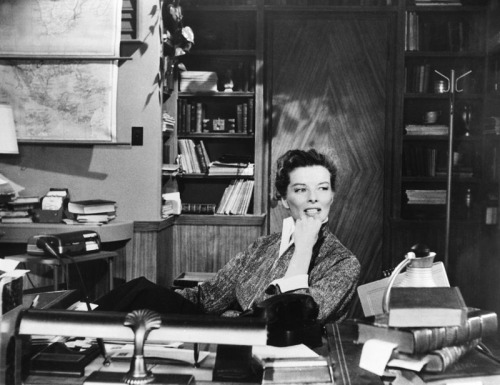
(The image is Katherine Hepburn from the movie Desk Set)

I started training on October 17th and this past week was the first on my own, without the woman I was replacing being there to help.  It went well, and I can see myself thriving in this fast-paced and dynamic place.  I’m sure I’ll talk about it more later.

Because my commute is now an hour (train, walk, subway, walk) each way,* starting very early in the morning, and because the days have been non-stop busy, I’ve been extremely tired when I have returned home each night.  My husband has been wonderful.  He made sure dinner was prepared and ready each night, knowing that I would be rushed to think-up and make something.  Sometimes I just don’t deserve him.  Because of this mental exhaustion, I have come home to eat, have a drink and sit down to something mindless – either TV, or folding clothes, or the like – I have not been able to handle anything else.  I would love to read and study some more, or to write here, but I have not been up to the task.

The other reason for my being away from here, and for being so tired, can be summed-up in 3 words:

OCTOBER IN SALEM

Every weekend we had something planned or someplace to go.  I had volunteered at the tourist Information Booth for 3 shifts** – a schedule I made while still unemployed.  This limited our ‘downtime’ as well.

As if the universe knew I would not have my days free anymore, all were booked from the end of September through my start date.  Here are a few highlights:

  • My husband’s birthday is the end of September, and we always go at least once to King Richard’s Faire.  We’ve made some friends with the people that work there, and they always remember us.
  • I had family visit for a few days to do some Ancestry.com research – this was unexpected, but a lot of fun and very informative!
  • I had 1 phone interview and 5 in-person interviews (2 in Salem, 3 in Cambridge)
  • My Goddaughter got married!  We drove the 4 hours in the rain to the Cape, and had a lovely (drier) drive back the next morning, with stops at the beach (a hurricane was passing by off the coast), and a little French bistro in Hyannis.

    img_3717
    “If you’re fond of sand dunes and salty air, quaint little villages, here and there, you’re sure to fall in love with Old Cape Cod.”
  •  I drove down to the South Shore to the graves of my paternal grandparents, maternal grandparents, and my Dad (3 different cemeteries in 3 different towns).  I washed the stones with a soft brush and water, cleaning off the lichen and dirt, swept away the leaves, had a chat with each of them and left some gifts (flower basket, a crystal, some rosemary, and some scotch).  For my Dad, I also brought a spade’s worth of dirt from his garden at home and mixed it in.
  • After visiting the graves, I drove further down to visit my Mom in the Memory Care unit of her Assisted Living apartment.  I had brought my laptop with me, and pulled-up all of the pictures from the wedding, and the freshly cleaned gravesites.  I had also printed a few pictures from the past month and had used my label maker to label each picture with the people’s names.  I brought the label maker with me and, while we were talking, I labelled the photos she had set-up next to the TV as well.  We had a great visit, and while it tears a little bit of my heart every time I notice how much more the Alzheimer’s has taken from her, I try to keep her happy and present.  I can cry in the car on the way home. We had a lot of laughs together and I could see how happy she was in those moments.  I only wish she could remember them when she is down.
  • I created a sewing pattern from our Harry Potter robes, and made myself a new robe out of this gorgeous green tweed flannel I got on sale.
  • I also made my outfit for the Info booth.  Here it is in its debut waiting for the Haunted Happenings Parade (I also have orange striped socks – they went better with the Info Booth vest I had to wear).  It was my first attempt at designing and making a hat, so I was very proud of it.  I received many compliments on both the hat and the tartan accents (I also made them)!

So this has been a very busy, but productive time.  This was supposed to just be a short note of why I’ve been quiet, but, like everything else, it took on a life of its own.

The Election has me crazy – I will likely never write about that here.  Let’s just hope that the right decision is made on Tuesday.

Be good to each other.
Happy New Year, Witches!


img_3378
Samantha Stephens (Bewitched) in a quiet moment before the craziness of October in Salem begins (note the Info booth in the background).  This is not the usual angle that people take photos of her.  Sorry Sammy!  I didn’t mean to be indelicate.

*I have been thrilled to have this uninterrupted time in the morning and afternoon on the train.  In the morning, I can sip my coffee and read a book or listen to a podcast, and ease into the day.  In the afternoon, I can shut-off from work and do the same thing, calming me down to arrive home without any stress or pressure from the day.  In my old job, I was driving both directions, which allowed me to listen to audio books or sing along to music, but there was still the stress of driving, traffic, weather, etc, so if I left work in a state of agitation, it lingered and came home with me.  Now, on the train, I can disconnect work from the rest of my life.

**It was a wonderful experience that I wish I had had the energy to report on at the time. Hopefully next year, I will be more diligent in sharing those experiences here as they happen.