Please don’t…

… finish my sentences.  I am 100% sure you do not know what I’m going to say.  It makes you look pushy, or bored with the conversation, or just like an asshole.  I understand that people do this to impress upon you that they have a superior intellect and that they are not only following-along with what you are saying, they already know everything about it.

… yell at me when I’m trying to help you.  If you’ve asked for my assistance and I am giving it to you, don’t take your frustrations out on me when I can’t understand what you are asking for.  I understand you are frustrated and angry with yourself and your situation, but the person helping you should never have to deal with your misdirected anger.

… wait in front of the train door when people are trying to get off.  You will get on, but only if you let us make room for you by exiting the car.

I don’t want to be negative, but there are certain behaviors that make me question how people have gotten this far in their lives without being told that these behaviors are unacceptable or rude.  I have already railed against self-important, blameless people, but it seems to be becoming the norm to be someone who is so outwardly self-centered, yet (ironically?) the exact opposite of self-aware.  Perhaps I am blessed to have had the time, resources, and opportunities to examine my own life choices – my temperament, my faults – maybe most people do not have that luxury?

Know thyself not Know thy selfie.

Is it because no one has challenged them up to this point?  Is that why they continue (or even start to develop) these behaviors?  Why is it tolerated in today’s society?  Are we so beaten-down by the daily news, or numb from being inundated with social feeds of people excelling (or, with schadenfreude: failing) in their lives?

i’d love to hear your thoughts.

The “Not My Fault” Generation

Like Beetlejuice, Bloody Mary or the Candyman, simply speaking their name can conjure-up an assumed attack, so I won’t use the “M” word.  Besides, I don’t have to, you knew who I was referring to just from the title, didn’t you?  Take a moment to think about that, whichever generation you may belong to.

Generations are always at odds about something.  From the dawn of time, the older generations think the younger are lazier or less (insert anything here) than they were.  The younger generation thinks the older generation is behind-the-times or too conservative.

Full disclosure: I am from Generation X (the latter end, though too early to be an Elder Millenial).  Am I supposed to blame the Baby Boomers for everything that is wrong?  Growing up, we heard a LOT about the Boomers, presumably because there were so many of them and because they held the power of the media at the time.  Some started young and had large families, and others had careers before they had children, so our generation spanned a wide range of older groupings and younger only children.  We also had a significantly larger number of us raised in single parent homes than the generations before us.  Personal observations have taught me that children from big families are polarized when it comes to raising their own families, depending on their own experiences.  Some had wonderful childhoods and want the same large unit they had.  Some had less-than-happy childhoods, so they limit their children to 1 or 2.  We definitely had a drop in fertility rates and statistically, the average family is still getting smaller.

Infertility treatments became a big business on the cusp of the generational switch in the late 70’s/early 80s, and continues to grow with seemingly no end. As technology improved, families should have been growing for GenX, not shrinking.  Is it because our generation waited to have children until their careers and homes were established?  Later (aged 35 or older) pregnancies come with increased risk and high medical cost, especially if treatment is needed, so late-in-life families tend towards sole child households.  These children are usually referred to as “miracle babies.”

It should come as no surprise that these miracle babies would be raised to be overprotected, overpraised, and sometimes overly criticized.  They represent a significant, and often painful, physical and financial investment, and are sometimes treated as such. Though not a new concept, GenX perfected Helicopter Parenting.  Can we blame them for an assumption of privilege or self-entitlement?  We have coddled a majority of this generation and done them a disservice when it comes to taking action for themselves or taking responsibility.

This report from the Pew Research Center shows that, financially, they are exceeding previous generations at their age, yet the media tells us that they can’t get jobs, or will not work because they won’t take jobs that are beneath them.  I have witnessed young job applicants that assume they are entitled to a senior-level salary directly out of college.  Perhaps schools need to teach more about starting salaries and advancement opportunities instead of teaching them that their career will start immediately.

Did we create this? Are we to blame for their Me Me Me behavior? Technology? Social Media?

To go back to this piece, the writer comes right out and says:
Stop blaming us for our issues when it was partially the fault of those who came before.

I will give him credit for including the word “partially,” yet there is still never an admission of his own fault.  It’s alluded to, but never addressed.

There are a few people here in town from this generation that are very active on social media and treat it as if their ~400 friends are actually millions of followers and that they are significant cultural leaders or celebrities.  You know the type – they ‘like’ or react to their own posts, and write them, as if for Buzzfeed, with leading and vague elements to drum-up interest.  One (let’s call him Jack) recently lost his job because he posted a libelous fake review on Yelp for another business, calling the owner homophobic, among other things.  He thought this was acceptable behavior because the business owner had given him a fake review that brought down his personal rating (rather than dealing with it the mature way).  The business owner told Jack’s boss about it, and the boss fired Jack (rightfully so) for the behavior and its reflection on her business.  Jack took to social media to tell his side of the story, pleading with his followers not to be mad at his former boss, blaming the other business owner, and taking none of the blame himself.   Now, Jack is licensed by the city.  He, again, went to social media to publicly accuse the licensing department of discrimination (he is bisexual) because they were refusing to renew his license.  Once again, he is not to blame for anything – everyone else has done this to him.

I have worked with two different strong career women (both technically of Baby Boomer generation) that used various methods to conceive a late-in-life first (and only) child.  Both of them treated their daughter like princesses, and both young ladies are now in their 20s, extremely sensitive to any minor inconvenience, and utterly spoiled.  I had known one of them since she was a baby, and I watcher her mother fawn and bow-down to this child (the few times a day she wasn’t with the nanny) to the point that the teenage daughter was essentially in control of the relationship and had her every whim seen to.

I’d like to think that each generation learns from the two before it and the one after it.  GenX is taught by the Boomers in response to what the Boomer’s saw were our Grandparents’ mistakes.  GenX then teaches this generation based on what we saw were the Boomer’s mistakes, and we grow based on what we learn in this ‘experiment’ of raising a next generation.

How will this generation react to the “Z Generation” when they come of age?  Will GenZ even come of age with Anti-vaxxers, multiple wars, drug-resistant infectious diseases, global warming, pollution…

Well, that’s depressing, so here’s a tongue-in-cheek ending:

“Get off my lawn!” will soon evolve into “Get off my semi-biodegradable, sustainably-dyed astroturf-made-of-89%-post-consumer-waste!”

What are your thoughts?

ENFP

I can’t remember where I took this test, but I thought enough to save the results in a .doc file, so I thought I’d share it here:

ENFP – THE INSPIRER

Extraverted – Intuitive – Feeling – Perceiving

FAMOUS ENFPs:

Oscar Wilde, Mark Twain, Salman Rushdie, Julian Assange, Walt Disney, Anne Frank, Fidel Castro, Keira Knightley, Jack White, Ellen DeGeneres, Orson Welles, Robin Williams, Gwen Stefani, Sandra Bullock, Sarah Michelle Gellar, Daniel Radcliffe, Sharon Stone

PERCENTAGE OF ENFPs AMONG POPULATION: 8.1%

ENFP – DESCRIPTION

ENFPs are warm, enthusiastic people, typically very bright and full of potential. They live in the world of possibilities, and can become very passionate and excited about things. Their enthusiasm lends them the ability to inspire and motivate others, more so than we see in other types. They can talk their way in or out of anything. They love life, seeing it as a special gift, and strive to make the most out of it.

ENFPs have an unusually broad range of skills and talents. They are good at most things that interest them. Project-oriented, they may go through several different careers during their lifetime. To onlookers, the ENFP may seem directionless and without purpose, but ENFPs are actually quite consistent. They have a strong sense of values which they live with throughout their life. Everything that they do must be in line with their values. They see meaning in everything, and are on a continuous quest to adapt their life and values to achieve inner peace. They’re constantly aware and somewhat fearful of losing touch with themselves. Since emotional excitement is usually an important part of the ENFP’s life, and because they are focused on keeping “centered”, the ENFP is usually an intense individual, with highly evolved values.

An ENFP needs to focus on following through with their projects. This can be a problem area for some of these individuals. Unlike other Extroverted types, ENFPs need time alone to center themselves, and make sure they are moving in a direction which is in sync with their values. ENFPs who remain centered will usually be quite successful at their endeavors. Others may fall into the habit of dropping a project when they become excited about a new possibility, and thus they never achieve the great accomplishments which they are capable of achieving.

Most ENFPs have great people skills. They are genuinely warm and interested in people, and place great importance on their inter-personal relationships. ENFPs almost always have a strong need to be liked. Sometimes, especially at a younger age, an ENFP will tend to be “gushy” and insincere, and generally “overdo” in an effort to win acceptance. However, once an ENFP has learned to balance their need to be true to themselves with their need for acceptance, they excel at bringing out the best in others, and are typically well-liked. They have an exceptional ability to intuitively understand a person after a very short period of time, and use their intuition and flexibility to relate to others on their own level.

Because ENFPs live in the world of exciting possibilities, the details of everyday life are seen as trivial drudgery. They place no importance on detailed, maintenance-type tasks, and will frequently remain oblivious to these types of concerns. When they do have to perform these tasks, they do not enjoy themselves. This is a challenging area of life for most ENFPs, and can be frustrating for ENFP’s family members.

ENFPs sometimes make serious errors in judgment. They have an amazing ability to intuitively perceive the truth about a person or situation, but when they apply judgment to their perception, they may jump to the wrong conclusions.

ENFPs who have not learned to follow through may have a difficult time remaining happy in marital relationships. Always seeing the possibilities of what could be, they may become bored with what actually is. The strong sense of values, however, will keep many ENFPs dedicated to their relationships. However, ENFPs like a little excitement in their lives, and are best matched with individuals who are comfortable with change and new experiences.

Having an ENFP parent can be a fun-filled experience, but may be stressful at times for children with strong Sensing or Judging tendencies. Such children may see the ENFP parent as inconsistent and difficult to understand, as the children are pulled along in the whirlwind life of the ENFP. Sometimes the ENFP will want to be their child’s best friend, and at other times they will play the parental authoritarian. But ENFPs are always consistent in their value systems, which they will impress on their children above all else, along with a basic joy of living.

ENFPs are basically happy people. They may become unhappy when they are confined to strict schedules or mundane tasks. Consequently, ENFPs work best in situations where they have a lot of flexibility, and where they can work with people and ideas. Many go into business for themselves. They have the ability to be quite productive with little supervision, as long as they are excited about what they’re doing.

They have a strong need to be independent, and resist being controlled or labelled. They need to maintain control over themselves, but they do not believe in controlling others. Their dislike of dependence and suppression extends to others as well as to themselves.

ENFPs are charming, ingenuous, risk-taking, sensitive, people-oriented individuals with capabilities ranging across a broad spectrum. They have many gifts which they will use to fulfill themselves and those near them, if they are able to remain centered and master the ability of following through.

Autumnal Equinox

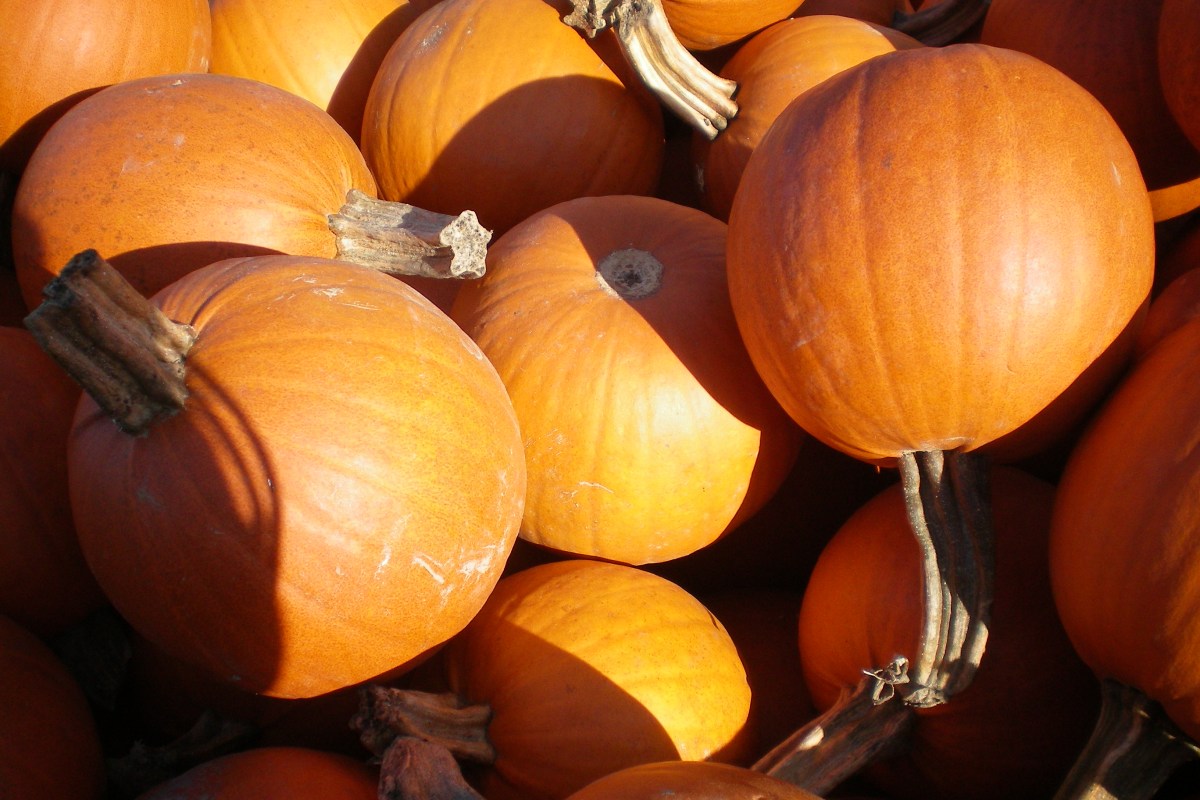
Today (22 September 2016) is the Autumnal Equinox here in the Northern Hemisphere (Happy Spring to those of you on the other side of the equator!).  Here in Salem, some neo-pagans are celebrating Mabon, nearby rural farmers are celebrating the Second Harvest, city dwellers are celebrating Pumpkin Spice Everything, and those of us who love the briskness of the Fall are eagerly anticipating sweater and cider weather!!

100_0122
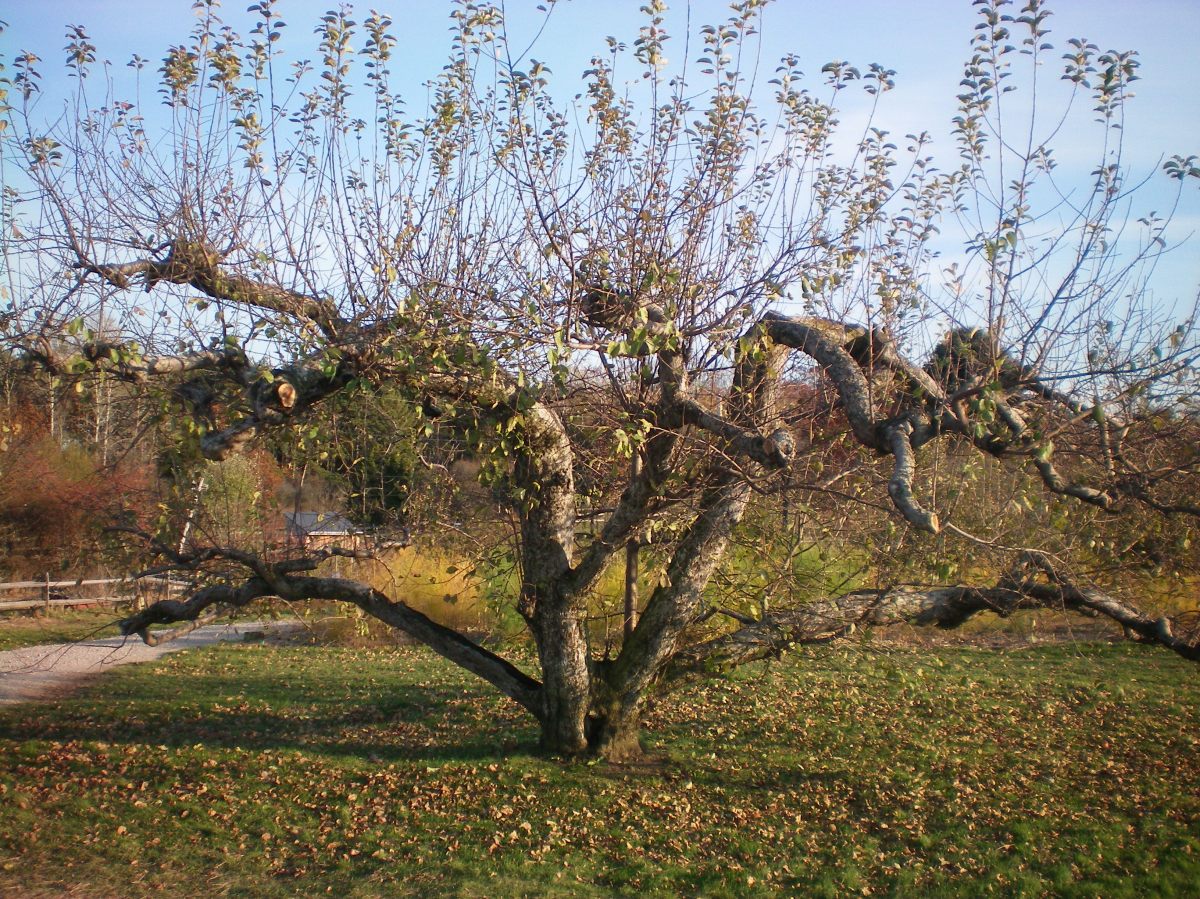
Late harvest in the Apple orchard.  Mmmm…cider donuts and apple pie!

I remember when I was in college (quite awhile ago), walking quickly through campus one day.  I happened to look up at the side of the building before heading in through the stage door and stopped, in shock.  The building was always covered in ivy, but at that moment it was a bright and vibrant red.  I looked around, and sure enough, the trees were all shades of orange and yellow and tawny ocher.  I had been so busy and so preoccupied with classes and rehearsals that I had completely missed the changing of the seasons.  I made it a point to pay more attention, especially when the following Spring arrived and the flowers and trees came into bloom.  After all, we are always hearing the advice to “Stop and smell the roses.”  Well, stop and enjoy the other changes, too!

Somewhere between that moment and the period we know as adulthood, with all of its similar trappings of hurrying through life without looking up, I had forgotten that lesson. It popped-up again a few years ago, but in a more profound and succinct way for me.  I had taken my car off the road for a year and decided to commute to work on the train.  Our condo is steps from the Salem station, and my office was a 1/2 mile walk from the Gloucester station (Cape Ann is a beautiful place to visit).  For the first 10 months I rode the train like everyone else: head down, staring at my phone.  One morning, I happened to look up and catch a view out the window that could almost have been staged; it was so perfect, and it took my breath away.  I had to write it down immediately.*  It was an epiphany, of sorts, and a reminder.  I’ve never taken it for granted again.

October 26, 2012 8:47am:

There is beauty in this world.

I can commute along the same route
Day after day reading or playing on my phone
But once in awhile (less often than I’d like, but more than I feel comfortable with) 
Nature tugs on my sleeve and exclaims:

“Look what I have done for you!

You are on your way to sit at a desk indoors, glued to a screen and wired into the counterfeit world, and you are spending your time giving all of your attention o a smaller window (bane of society) into that false world.

I am putting on my best colors for you!

Look now and you will see a buck and doe fleeing into the umber forest.

Even though we are separated by a sheet of glass and you are traveling by me at a fast speed in a version of a machine that has choked and destroyed me for ____ years, look out and appreciate me.

See how I have made the waters calm and smooth to mirror the beauty of my autumn colors and to expand the sky beneath you.

See how each neighboring tree can burst in vibrant or subdued hues next to one another and be beautiful.

Not everyone can be a flaming red Maple, but see how I have given beauty to even the dullest of brown trees?”

This speech from Nature probably would have continued, but I was pulling-in to my station and needed to get to work.  Perhaps I will stop to listen again and She will tell me the rest of the story.  Perhaps you can finish it and tell me what you’ve heard.

Anyway, I just thought I’d share it here to remind myself to stop and take a moment to notice the world around me, and maybe to inspire you to do the same.

So go.  Take a moment to enjoy the change of seasons.

Take a moment away from the computer/phone/tablet (after you read this, of course).

Take a breath.

Live life.

Repeat.

Enjoy.

(In looking for photos to show the view, I stumbled on this site with gorgeous professional shots of Cape Ann and some foliage by Elinor Teele.  I don’t know her, but the photos are stunning.)

*Full disclosure: I then went right back to looking at my phone, as it was the only place I could write this down as it was happening.  Since then, I have tried to keep a small pocket-sized journal and pen with me, but that is not always practical.  My phone is full of notes and reminders, and (for better or worse) it’s always with me.